
Outdoor events are no longer limited to open, grassy fields. Today, some of the most lucrative venues for commercial events, corporate gatherings, weddings, and community festivals are paved surfaces. From sprawling asphalt parking lots and industrial concrete pads to elegant brick courtyards and marble plazas, hard-surface setups are highly requested.
For event rental professionals and venue operators, the ability to safely erect a structural canopy on these surfaces opens up massive revenue streams. However, pitching a temporary structure on a surface where you cannot drive a standard steel stake presents significant engineering and safety challenges. When you cannot puncture the ground, standard installation rules fly out the window.
Failing to anchor a tent properly on a hard surface is one of the most dangerous mistakes an operator can make. Wind forces can transform an unanchored or poorly weighted tent into a dangerous sail, leading to catastrophic equipment damage or severe liability claims.
This comprehensive guide delivers professional, field-tested methodologies for installing commercial-grade party tents on concrete, cement, and other hard surfaces. By mastering these anchoring techniques, your business can confidently execute complex installations while prioritizing safety, structural integrity, and commercial value.
Understanding Your Structure: Frame Tents vs. Pole Tents
Before diving into anchoring mechanics, it is vital to analyze the structural engineering of the tent itself. Tents are generally categorized into two primary styles, and their underlying engineering dictates whether they can even be utilized on a hard surface.
Pole Tents
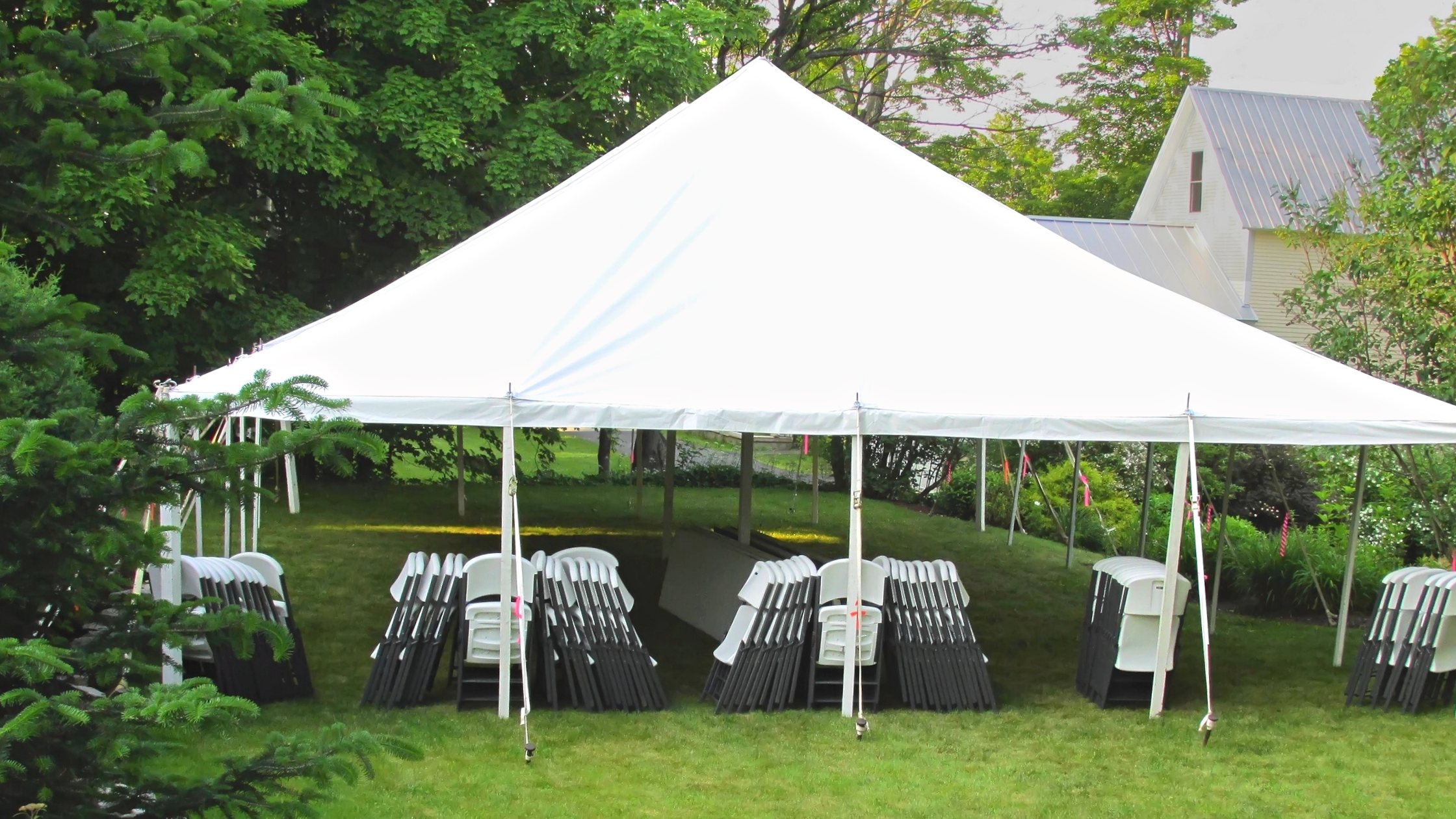
Pole tents rely completely on tensioned fabric to maintain structural integrity. Center poles push the vinyl upward, while side poles push outward. This outward force must be counteracted by heavy-duty tie-downs anchored deeply into the ground. Because pole tents require immense, constant outward tension, they are incredibly difficult and often impractical to set up on concrete using temporary weights. They almost always require physical drilling and staking into the ground.
Frame Tents
Frame Tents are the industry standard for hard-surface installations. These structures feature a rigid, self-supporting framework made of heavy-duty aluminum or steel tubing. The framework maintains the shape of the tent independently, meaning the fabric top simply rests over the structure. Frame tents do not require outward tension to stay upright. However, they still require substantial anchoring to prevent wind from lifting or sliding the structure across the smooth surface.
For specialized setups, platforms like a 20 x 20 HPF frame tent offer the perfect balance of structural rigidity and footprint versatility for hard surfaces.
Method 1: Anchoring with Weights and Ballast (No-Drill Method)
When drilling into a surface is prohibited by a client, city ordinance, or property manager, utilizing ballast weight is the only viable solution. This method relies entirely on gravity and friction to counteract the lifting forces generated by the wind.
Choosing the Right Ballast Material
To maintain a professional aesthetic and satisfy safety codes, event companies must utilize heavy-duty, uniform ballast options:
-
Concrete Ballast Blocks: Engineered concrete blocks equipped with built-in steel eyelets are the gold standard for high-capacity anchoring. They can be stacked and neatly wrapped or branded to preserve venue aesthetics.
-
Water Drums / Interlocking Water Barrels: High-density polyethylene barrels filled with water are highly popular due to transport efficiency. Empty barrels are lightweight; once placed on-site, they are filled via a water source. A standard 55-gallon drum filled with water weighs approximately 460 pounds.
-
Vinyl Sandbags: For smaller canopy setups, specialized vinyl sandbags provide targeted, secure weight capacities without scratching delicate premium surfaces.
Calculating Your Weight Requirements
Never guess how much weight your tent requires. Wind blowing over and under a tent creates a wing effect, producing immense upward lift. The exact weight requirement depends on the size of the tent, local weather forecasts, and the manufacturer's engineering guidelines.
Pro Calculation Tip: A basic industry rule of thumb for standard frame tents under mild weather conditions is a minimum of 200 to 500 pounds of ballast per tent leg. For large clear-top structures or high-wind environments, this requirement can easily double. Always consult your specific structural engineering manual before finalized placement.
If you are expanding your inventory to meet these demanding corporate contracts, it is crucial to analyze your financial metrics first. You can use this helpful tool to run your operational figures: Try our ROI calculator.
Executing the Tie-Down Connection
Once your weights are positioned at each leg base, they must be securely tied to the tent's crown or upper frame joints.
-
Avoid Bungee Cords or Cheap Ropes: These materials stretch under load and degrade rapidly in outdoor environments.
-
Use Commercial Ratchet Straps: Industrial-grade polyester webbing straps are mandatory. To learn how to execute tight, professional connections that will not slip under wind load, refer to this guide on how to use ratchet straps.
-
Strap Routing: Secure the strap to the heavy-duty perimeter eave fitting of the tent frame, route it downward to the weight eyelet, and tension the ratchet until the strap is taut with zero slack.
Method 2: Drilling and Concrete Anchoring (The Mechanical Method)
When wind forecasts are high, space constraints limit the footprint of bulky ballast blocks, or maximum structural stability is mandatory, mechanical concrete anchoring is the preferred method. This process involves drilling temporary holes directly into the concrete pad to install heavy-duty drop-in anchors or expansion bolts.
Essential Tools for Mechanical Installation
Before starting a mechanical anchor installation, make sure your installation crew has the right equipment on hand. Having the right tools saves time and ensures the job is done safely. For a deep dive into necessary setup gear, check out our guide on the 3 tools you need for your next tent installation.
For a concrete setup, you will specifically need:
-
Commercial-grade rotary hammer drill
-
Carbide-tipped masonry drill bits matching your anchor diameter
-
Heavy-duty air blow-out pump or industrial vacuum to clear concrete dust from the holes
-
Drop-in anchors, wedge anchors, or concrete screw bolts (such as Tapcons)
-
Set tool and hammer (for drop-in style anchors)
-
Impact wrench or torque wrench
Step-by-Step Concrete Drilling Guide
-
Mark Your Layout: Assemble the perimeter frame of your tent exactly where it will sit during the event. Mark the precise location of each leg footplate hole on the concrete surface.
-
Verify Sub-Surface Safety: Ensure there are no embedded utility lines, electrical conduits, or tensioning cables within the concrete slab before drilling.
-
Drill the Hole: Affix the correct size masonry bit to your rotary hammer drill. Drill vertically down to the depth specified by the anchor manufacturer.
-
Clean the Void: Use an air pump or vacuum to remove all residual concrete dust from the hole. If dust remains, the anchor will not bind correctly, compromising its pull-out strength rating.
-
Insert and Set the Anchor: For drop-in anchors, insert the expansion sleeve into the hole, insert the setting tool, and strike it firmly with a hammer to expand the base inside the concrete. For concrete screw bolts, drive the bolt directly through the tent footplate utilizing an impact wrench.
-
Secure the Footplate: Tighten the bolts down until the tent footplate is flush against the ground, ensuring zero shifting capability.
Restoring the Concrete Post-Event
Once the event concludes and the tent is dismantled, you must properly repair the venue substrate:
-
Remove the bolt or top portion of the anchor.
-
Fill the remaining hole with a premium, non-shrink concrete patching compound or outdoor rated epoxy resin.
-
Smooth the surface using a trowel to match the surrounding finish, ensuring the venue is left pristine and free of tripping hazards.
Essential Safety Protocols for Hard-Surface Setups
Operating on hard surfaces presents unique challenges that do not exist on soft turf. Implementing rigid safety protocols protects your crew, your inventory, and event guests.
Surface Friction and Slip Prevention
Concrete can be smooth, leading to reduced friction between the tent legs and the ground. Under lateral wind loads, tent legs can shift or "walk," warping the upper framework. Ensure all footplates are fitted with heavy-duty rubber friction pads or are mechanically fixed to prevent lateral sliding.
Weather and Wind Monitoring
Wind speeds can change rapidly, turning a successful event into an emergency situation. Reviewing your party tent emergency situations protocol will keep your crew prepared for sudden weather changes.
-
Always deploy an on-site anemometer to measure real-time wind speeds.
-
Understand the wind rating limits of your specific structure.
-
Incorporate weather-contingency structural additions such as tensioned sidewalls to prevent wind from getting underneath the canopy top.
Hard Surface Protections
Dragging heavy aluminum pipes, steel fittings, or commercial vinyl across concrete will cause scratching, tears, and structural degradation. Always layout industrial protection tarps across the setup zone before unpacking your tent components to shield your fabrics and metals from abrasion.
Comprehensive Structural Anchoring Comparison
| Anchoring Method | Best Suited For | Key Advantages | Major Limitations |
| Concrete Ballast Blocks | High-wind areas, corporate venues, long-term installations | Exceptional pull-out resistance, professional appearance | Requires a forklift or pallet jack to move on-site |
| Water Drums (55 Gal) | Quick setups, venues with an accessible water source | Cost-effective, easy logistics when transported empty | Large footprint reduces usable event square footage |
| Mechanical Drilling | Maximum safety setups, high-wind zones, restricted tight spaces | Permanent structural hold, cleanest aesthetic finish | Requires venue permission, specialized tools, and surface patching |
| Vinyl Sandbags | Small pop-up frames, low-impact perimeter balancing | Fast installation, surface-safe material composition | Low individual weight capacity; requires stacking for large tents |
Elevate Your Business and Event Infrastructure
Expanding your event capabilities to cover concrete, cement, and paved surfaces requires investment in high-quality commercial inventory. For over 25 years, TentandTable has supplied durable, brand-new, commercial-grade equipment built for demanding rental environments. Headquartered in Buffalo, NY, we specialize in high-capacity equipment engineered to perform safely on any surface.
We provide comprehensive event infrastructure solutions across several core product categories, backed by fast nationwide shipping and expert customer service:
-
Commercial Party Tents: Exceptional heavy-duty engineering featuring premium PVC fabrics and robust structural frames built to withstand concrete anchoring demands.
-
Commercial Inflatables: Durable bounce houses and slides engineered to meet stringent safety requirements.
-
Event Furniture: Rugged folding tables and high-density banquet chairs designed to maximize venue seating capacity.
-
Supplemental Rentals: Modular staging, portable dance floors, and professional lighting kits to complete any commercial space setup.
Ready to upscale your commercial inventory or need expert guidance selecting the proper anchoring hardware for your next complex hard-surface installation? Contact our TentandTable team today to speak directly with an industry expert.
Frequently Asked Questions (FAQs)
How do your shipping timelines look for heavy commercial tents and ballast accessories?
At TentandTable, we understand that timing is critical for your rental bookings. Operating from our central headquarters in Buffalo, NY, we offer fast nationwide shipping on all commercial tents, inflatables, and accessories. Most in-stock orders ship within 24 to 48 hours, ensuring you receive your gear in time for peak season demands.
Are your commercial tents engineered to meet strict municipal safety and fire codes?
Yes. All of our commercial-grade party tents are manufactured with premium, flame-retardant PVC-coated vinyl tops that meet or exceed NFPA 701 structural fire safety standards. Our frames feature heavy-duty anodized aluminum or galvanized steel construction, providing the structural ratings required by local building inspectors and fire marshals for commercial installations.
Can I place large volume or mixed fleet orders for tents, inflatables, and event furniture together?
Absolutely. We specialize in outfitting complete commercial event rental fleets. Whether you are expanding your business with tents, buying a new fleet of folding tables and banquet chairs, or adding profitable commercial inflatables to your catalog, our team can build a custom, volume-discounted package tailored to your exact operational scale.
What is the expected operational lifespan of a TentandTable frame tent under heavy commercial rental use?
Our products are built for demanding rental environments. With proper cleaning, dry storage, and standard preventative maintenance, our heavy-duty commercial frames and premium vinyl tops can last for years of continuous weekend rentals, delivering an outstanding return on investment for your business.
Conclusion
Mastering the technical skill of setting up commercial structures on hard surfaces separates premium event operators from casual suppliers. By executing precise ballast weight equations or employing expert mechanical drilling techniques, you protect your clients, secure your structural assets, and open up profitable new venue options.
As you plan your upcoming corporate and community event layouts, consider how upgrading your technical capabilities can grow your business. When you look at the properties and venues in your target market, what hard-surface spaces could you transform into profitable event venues with the right anchoring setup?

