In the high-stakes world of commercial event rentals, asset protection and public safety are paramount. Whether you are anchoring massive commercial party tents, transport-heavy event furniture, or high-profile commercial inflatables, your setups depend entirely on the strength of your tie-downs.
A single failure due to an improperly threaded or tensioned strap can result in severe equipment damage, lost revenue, and major liability issues. Understanding exactly how to use ratchet straps is a foundational safety skill that every event crew, rental operator, school coordinator, and government logistics manager must master.
At TentandTable, we have spent over 25 years manufacturing and supplying durable, brand-new, commercial-grade equipment built for demanding environments. Headquartered in Buffalo, NY, we provide fast nationwide shipping and consultative expert service to help you protect your bottom line. In this comprehensive guide, we cover everything you need to know about operating ratchet tie-down straps safely, efficiently, and like a seasoned industry professional.
Anatomy of a Commercial Ratchet Strap
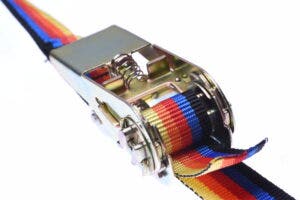
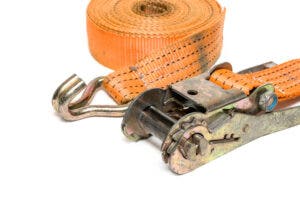
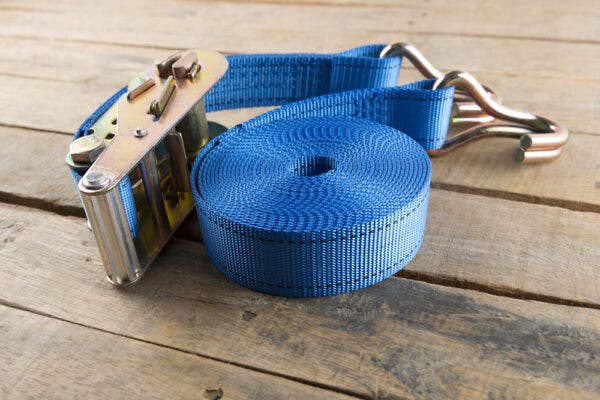
Before threading webbed strapping into a mechanism, it helps to understand exactly what you are holding. A standard commercial-grade ratchet tie-down system consists of two primary components:
1. The Fixed End (The Ratchet Mechanism)
This short piece of heavy-duty polyester webbing is permanently attached to the metal ratcheting hardware on one side and features an anchor hook (like a double-J hook, flat hook, or snap hook) on the other. Key parts of the metal hardware include:
-
The Mandrel (or Slot): The center rotating cylinder that winds up the webbing.
-
The Release Lever: A spring-loaded trigger used to disengage the locking pawls when you want to loosen the strap.
-
The Main Handle: The lever pulled back and forth to rotate the mandrel and crank up the tension.
2. The Adjustable End (The Long Strap)
This is a long, continuous length of high-tensile polyester webbing with a cargo hook at one end and a raw, cleanly cut tail at the other. This tail feeds directly into the mandrel slot.
Step-by-Step Guide: How to Thread and Tighten a Ratchet Strap
Improper threading is the number one cause of jammed hardware and slipping straps. Follow this precise operational checklist to ensure a rock-solid lock every single time.
Step 1: Open the Ratchet Mechanism Completely
Pull up on the spring-loaded release lever inside the handle and open the assembly fully. The handle should lay completely flat, exposing the open slot in the center cylinder (the mandrel). Rotate the mandrel manually until the slot is facing directly toward you.
Step 2: Feed the Webbing Bottom-Up
Take the raw end of the long adjustable strap and insert it through the bottom side of the mandrel slot. Pull the webbing straight up through the slot.
Step 3: Pull the Excess Webbing Through
Pull the loose strap through the slot until it is relatively taut across your cargo or anchor point. If you leave too much slack before you begin ratcheting, the mandrel will fill up with too many layers of fabric, jamming the mechanism before the assembly reaches full tension.
Step 4: Crank the Handle to Tension
Bring the main handle up and down in a rhythmic pumping motion. As you cycle the handle, the mandrel rotates, wrapping the webbing tightly around itself. Continue ratcheting until the strap is highly secure and firm.
Pro Tip: Look for at least two full wraps of webbing around the mandrel to prevent slipping, but ensure it does not bunch up against the outer frame of the metal hardware.
Step 5: Lock the Handle Down Flat
Once you achieve proper tension, pull the spring-loaded release lever back up and swing the main handle down into a completely closed, flat position. This engages the safety locks and ensures the mechanism cannot accidentally pop open during transport or under high wind loads.
Step-by-Step Guide: How to Release a Ratchet Strap Safely
Releasing a strap under high tension can be hazardous if done carelessly. Follow these steps to disengage the locking mechanism safely.
Step 1: Pull the Release Lever Fully Up
Reach inside the handle assembly and firmly compress the spring-loaded release lever. This pulls the locking bars clear of the geared teeth.
Step 2: Open the Handle 180 Degrees Until Flat
With the release lever held up, open the main handle completely until it clicks into a completely flat, horizontal position. You will feel a sudden release of tension as the internal gears unlock.
Step 3: Pull the Webbing Out
With the mechanism resting flat and wide open, simply pull the continuous webbing out from the center slot to free your gear.
Essential Safety and Maintenance Protocols for B2B Operations
In professional commercial settings—whether securing high-capacity seating layouts or anchoring a high peak tent—equipment reliability is a non-negotiable metric. Protect your investments and crews by implementing these maintenance standards:
-
Inspect Before Every Deployment: Check webbing for fraying, dynamic stress tears, chemical damage, or burns. Inspect metal buckles for bent frames, rusted springs, or cracked gears. If a strap shows visible damage, discard it immediately.
-
Know Your Ratings: Never exceed the Working Load Limit (WLL) printed on the strap’s compliance tag. Keep in mind that the break strength is different from the safe operating load limit.
-
Protect Webbing from Sharp Edges: Use specialized edge protectors or heavy-duty corner guards when strapping down hard plastic folding tables and chairs or metal staging components.
-
Store Clean and Dry: Dirt, mud, and moisture degrade polyester fiber over time and cause steel mechanisms to rust. Wash dirty straps down with mild soap, rinse thoroughly, and let them air-dry completely before storing them in your warehouse.
Maximizing Your Commercial Asset ROI
Every piece of ancillary hardware you purchase—from heavy-duty tie-downs to vinyl tarps—impacts your operational profitability. Before making your next large-scale inventory expansion, it is critical to evaluate how high-quality equipment affects your long-term margins.
We highly recommend using our interactive web tool to run your business projections: Try our ROI calculator. This helpful resource lets you map out your investment, project rental frequencies, and see how durable commercial assets translate into sustainable revenue.
Frequently Asked Questions (FAQs)
Are your commercial ratchet straps graded for heavy-duty tent anchoring?
Yes. At TentandTable, our premium ratchet straps are specifically engineered to meet the demanding requirements of commercial tent anchoring and heavy cargo tie-downs. They feature high-tensile polyester webbing that resists stretching and UV degradation, making them perfect for outdoor event environments.
How fast is your shipping for bulk or volume commercial orders?
We maintain a massive, fully stocked warehouse at our headquarters in Buffalo, NY, which allows us to offer exceptionally fast nationwide shipping. For large-volume or commercial pallet orders, our dedicated shipping department works with reliable freight lines to get your inventory delivered securely and efficiently.
How do I know if my ratchet straps are worn out and need replacement?
You should replace your tie-downs immediately if you observe any cuts, tears, severe fraying, or chemical burns along the webbing fabric. Additionally, if the metal ratcheting handle is rusted, bent, missing its spring-loaded release lever, or slipping gears, it is no longer safe for commercial use.
Can I use standard consumer-grade tie-downs for high-occupancy event structures?
We strongly advise against using consumer-grade straps for commercial applications. Commercial party tents and large inflatables are subject to significant wind lifting forces and dynamic loads. Utilizing certified, commercial-grade tie-downs ensures structural compliance, maximum safety, and long-term durability.
Conclusion
Mastering the mechanics of proper load securement keeps your crew safe, ensures your commercial setups remain standing in unpredictable weather, and preserves the pristine condition of your event inventory. Using high-quality tie-downs is an operational baseline that separate leading rental businesses from the competition.
Are you ready to upgrade your inventory with durable, field-tested anchoring gear, heavy-duty commercial tents, or high-earning rental assets? Contact our TentandTable team today to speak directly with an expert consultant about custom packages, bulk pricing tier structures, or streamlined financing options.
What training protocols does your team use to ensure every single anchor point is secured perfectly on-site?