


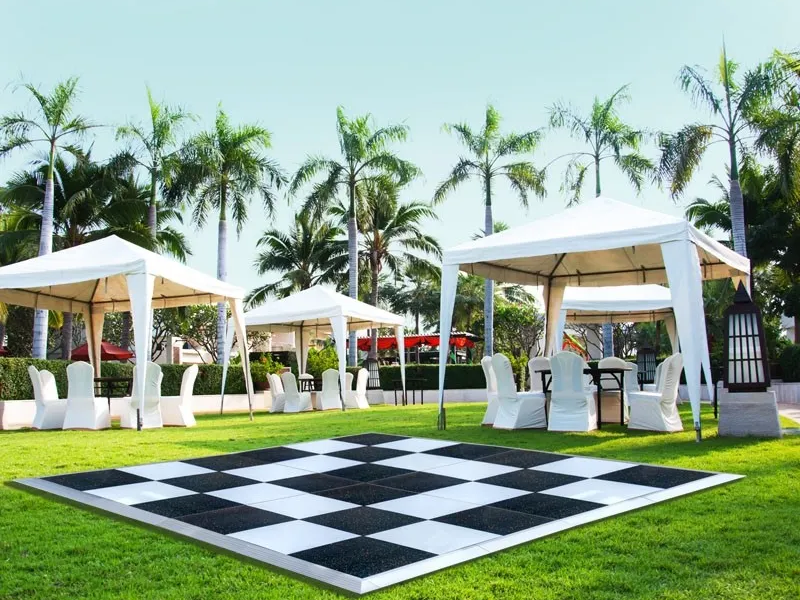
Outdoor events have shifted from being a seasonal alternative to a year-round preference across the United States. High-profile corporate galas, elegant vineyard weddings, university alumni weekends, and community festivals consistently demand open-air venues. At the heart of these gatherings is the dance floor—a central hub of energy, celebration, and social interaction.
For B2B buyers, event rental operators, and venue managers, delivering a premium outdoor experience involves a balancing act between aesthetic luxury and absolute mechanical safety. An outdoor environment presents unpredictable variables, including uneven terrain, hidden moisture, varying subsurfaces, and changing weather conditions. A sagging, shifting, or slippery dance floor is a serious liability that can damage guest safety and your brand's reputation.
Achieving structural stability while keeping a high-end style requires commercial-grade equipment and proven installation techniques. This comprehensive guide details how to engineer stable, safe, and visually striking outdoor dance floor setups that protect your clients, maximize your operational efficiency, and elevate your inventory's commercial value.
Assessing the Subsurface: The Foundation of Stability
Every successful outdoor installation begins with a thorough ground assessment. Laying a modular dance floor directly onto an untreated surface can cause joint separation, panel buckling, or moisture damage. Understanding the specific characteristics of your subsurface allows you to select the correct foundational barriers.
Setting Up on Grass and Turf
Grass is the most common outdoor surface, but it is also the most unpredictable. Soil density varies, and hidden dips can cause structural stress under heavy loads.
-
The Moisture Factor: Grass naturally retains and releases moisture, especially after nightfall. Unprotected wood or low-grade laminate panels absorb this moisture, leading to warping or rot.
-
The Solution: Always lay down a heavy-duty vinyl tarp as a moisture barrier before placing your subfloor or dance floor panels. For a deep dive into choosing and preserving protective layers, consult our guides on where to buy a tarp for your event and party rental business and how to make a tarp last longer. Additionally, understanding what are tarps made of and why do tarp materials matter helps operators pick puncture-resistant barriers that protect equipment from rough terrain.
Concrete, Asphalt, and Hard Surfaces
Solid surfaces eliminate the risk of sinking, but they introduce friction and leveling challenges.
-
The Sloped Terrain Challenge: Most concrete plazas, driveways, and parking lots are designed with a slight slope to manage rainwater runoff. This minor angle can cause interlocking dance floor tiles to drift or separate over hours of heavy use.
-
The Solution: Use interlocking high-density plastic subfloors or rubberized underlayments to absorb vibrations and prevent shifting. For more tips on managing hard-surface challenges, read our guide on how to set up a party tent on concrete, cement, and other hard surfaces.
Structural Engineering: Subfloors, Leveling, and Anchoring
Once the subsurface is assessed, your team must build a flat, level staging platform. Leveling guarantees that panels lock together seamlessly, eliminating trip hazards and protecting the locking teeth of your commercial inventory.
Utilizing Plywood Subfloors and Modular Platforms
For premium events, laying dance floor panels directly on the ground is rarely sufficient. A robust subfloor distributes weight evenly across a larger surface area.
-
Staggered Layout: When building a plywood subfloor, stagger the seams in a brick-work pattern. This distribution prevents a single continuous line of weakness across the floor.
-
Shimming and Wedging: Use rot-resistant composite shims beneath the subfloor framework to correct minor ground depressions.
Weatherproofing and Water Mitigation
Outdoor event planners must always prepare for sudden weather shifts. Rain can quickly turn a dry grass lawn into mud, causing dance floor corners to sink unequally.
-
Elevated Systems: For multi-day setups or areas prone to sudden heavy downpours, consider raised staging systems or integrated sleeper-and-joist subfloors. Elevating the dance floor allows water to flow underneath without pooling on the dancing surface. For full weather-readiness strategies, check out our guide on rain or shine: how to plan for weather changes at outdoor parties.
Selecting Commercial-Grade Equipment for Longevity
For event rental professionals, universities, and hospitality groups, durability equals profitability. Investing in high-quality, commercial-grade equipment reduces maintenance overhead, prevents premature inventory replacement, and ensures code compliance.
When assessing new inventory, running a precise financial analysis helps you understand your payback period and long-term margins. Before making your next capital expenditure, try our ROI calculator to accurately calculate the commercial value of your investment.
Material Selection: Vinyl vs. Wood vs. Composite
-
Real Wood Panels: Beautiful and classic, but high-maintenance. They require frequent sanding, resealing and are sensitive to moisture.
-
Vinyl and Composite Systems: The industry standard for modern B2B rental fleets. High-quality vinyl dance floors mimic the appearance of natural oak, walnut, or modern monochrome styles while offering full water resistance and effortless cleaning. To maintain these assets correctly, review our instructions on how to clean a portable dance floor—its super easy.
The Importance of Heavy-Duty Trim and Edging
A dance floor setup is incomplete without specialized perimeter edging. Commercial-grade sloped aluminum or heavy-duty vinyl transitions provide critical functionality:
-
ADA Compliance and Safety: Sloped edging creates a smooth transition from the ground to the dance floor surface, reducing trip liabilities.
-
Locking the Perimeter: The perimeter trim locks the outer rows of panels firmly in place, preventing the field tiles from shifting outward under lateral dancing forces.
Styling the Outdoor Dance Floor: Creating a Visual Centerpiece
A stable floor provides safety, but its design creates the ambiance. The dance floor should match the broader layout of your party tents and outdoor furnishings.
Layout Integration with Tents and Framing
Positioning the dance floor under a high-quality shelter protects your structural investment from midday heat and evening dew.
-
High-Peak and Clear-Top Tents: Pairing an elegant dance floor with a clear-top tent creates an upscale aesthetic for evening events. Explore options in our clear top tents: a fall favorite for high-impact outdoor events overview or the high peak tent: perfect wedding tent guide.
-
Sizing the Footprint: Ensure the tent footprint extends at least 4 to 6 feet beyond the dance floor perimeter. This prevents wind-driven rain from hitting the dancing surface. To calculate your space requirements, consult our guide on what size party tent do I need for my party rental company.
Illumination and Ambiance
Proper lighting highlights the dance floor as the event's focal point while improving nighttime safety.
-
Perimeter String Lighting: Hanging overhead bistro lights or industrial string lights outlines the dance space clearly. Learn practical setup tips in how to hang outdoor string lights in your party tent.
-
Up-Lighting and Wash Effects: Placing LED wash lights around the base of tent poles or dance floor trim adds depth and dimension to the venue.
Managing Your Rental Inventory: Logistics and Care
A dance floor is a heavy, high-use asset. Streamlining how your crew transports, installs, and maintains these systems speeds up turnaround times and protects your bottom line.
Efficient Transport and Handling
Dance floor panels are heavy and prone to edge damage if mishandled during loading and unloading.
-
Dedicated Transport Carts: Invest in heavy-duty, rolling panel carts that allow sheets to be stacked vertically. This layout protects the locking mechanisms and simplifies warehouse organization. For warehouse efficiency tips, read about maximizing your warehouse space with organization tips.
-
Material Handling: Utilizing commercial-grade material handling tools makes on-site delivery much safer. Read our guide on the basics of dollies and hand trucks to protect your crew from strain during heavy setups.
Long-Term Maintenance and Smart Refurbishment
After peak event season, inspect every panel for wear, deep scratches, or damaged locking clips. Clean the panels thoroughly to prevent mold growth during winter storage. If you plan to rotate or upgrade your inventory, check out our guide on selling used party rental equipment after seeing your ROI.
Buyer Checklist: Outdoor Dance Floor Installs
Use this quick operational checklist for your next outdoor dance floor setup:
|
Phase |
Operational Step |
Key Consideration |
|
1. Site Inspection |
Verify ground slope, drainage path, and underground utilities. |
Avoid low-lying turf areas prone to water pooling. |
|
2. Foundation Layers |
Lay down a heavy-duty moisture barrier or tarp. |
Prevents ground moisture from warping your panels. |
|
3. Leveling |
Lay the subfloor framework and apply composite shims. |
Ensure a flat surface across the entire footprint. |
|
4. Panel Interlocking |
Assemble panels from the center outward or from corner to corner. |
Confirm clicking mechanisms lock cleanly without forcing. |
|
5. Perimeter Lock |
Anchor the sloped aluminum safety trim around the edges. |
Eliminates trip hazards and locks the footprint in place. |
Partner with TentandTable for Commercial-Grade Success
For over 25 years, TentandTable (headquartered in Buffalo, NY) has supplied durable, brand-new, commercial-grade equipment built for demanding rental environments. We serve a diverse range of B2B buyers across the United States—including event rental businesses, schools, universities, churches, summer camps, and government agencies.
Our extensive inventory covers everything needed to build profitable event packages, featuring:
-
Commercial Party Tents (including heavy-duty pole, frame, and high-peak canopy models)
-
Event Furniture (high-impact folding tables and banquet chairs built to last)
-
Supplemental Rentals & Staging (modular staging, commercial portable dance floors, and heavy-duty lighting)
-
Commercial Inflatables (commercial bounce houses, obstacle courses, and water slides)
With fast nationwide shipping and expert customer service, we ensure your team receives your equipment on time for your peak season. Whether you are expanding an established rental fleet or launching a new venue, our team provides the durable products and financing solutions your business requires.
Ready to upgrade your inventory with commercial-grade tents, furniture, or dance floor systems? Contact our TentandTable team today to connect with a dedicated commercial account representative.
Frequently Asked Questions (FAQs)
How long does it take to ship commercial dance floors and tents nationwide?
At TentandTable, we prioritize fast nationwide shipping from our centralized distribution networks. Most in-stock commercial equipment ships within 24 to 48 hours of order confirmation. Transit times range from 2 to 5 business days, depending on your destination, ensuring you receive your gear well ahead of your next major event deadline.
Can these dance floors be safely installed directly on uneven grass?
We do not recommend installing modular panels directly on uneven grass without a proper foundation. For uneven ground, always install a solid plywood subfloor or modular plastic staging matrix first, leveling the system with commercial shims. Always lay a high-quality tarp down as a moisture barrier beneath the framing to protect your inventory from ground moisture.
What maintenance is required to keep commercial vinyl dance floors looking brand new?
Our commercial vinyl panels are engineered for low-maintenance upkeep. Clean them after every rental using warm water and a mild non-abrasive floor cleaner to remove dirt, scuffs, and beverage spills. Avoid harsh solvents or wire brushes that can scratch the surface finish, and ensure the panels are completely dry before stacking them vertically on your transport carts.
Do you offer financing options or volume discounts for large corporate or institutional orders?
Yes. We routinely work with schools, universities, municipalities, and expanding rental companies to provide flexible commercial financing plans. Through our competitive financing partnerships, you can secure the inventory you need now while managing your cash flow effectively. Volume discounts are also available for fleet expansions; speak directly with your account manager for a custom quote.
Conclusion
Building a flawless outdoor dance floor setup requires combining structural stability with clean, welcoming style. By assessing the ground conditions, using solid subfloors, and choosing commercial-grade equipment, your team can deliver a safe, premium experience that stands out in the competitive event marketplace.
When you look at your current outdoor event setup, does your equipment give you full confidence against unexpected weather and heavy use? To explore your options, contact our TentandTable team today and let us help you find the durable equipment your business deserves.