
Choosing the Right Box Truck for Your Tent Rental Business

Choosing the Right Box Truck for Your Tent Rental Business

Every seasoned operator in the commercial event industry knows a simple truth: your business is only as fast, reliable, and capable as your delivery fleet. You can own the most pristine, high-demand inventory in your region, but if you cannot transport it safely, efficiently, and on time, your bottom line will suffer.

As corporate events, large-scale outdoor weddings, and community festivals continue to scale up, the logistical demands on B2B event rental companies are higher than ever. Transporting heavy, commercial-grade gear requires serious planning. If you are still relying on standard pickup trucks and open trailers, you are likely hitting a bottleneck in your operations. Moving up to a dedicated box truck is the single most effective way to protect your inventory, reduce labor hours, and scale your bookings.

But buying a commercial vehicle is not like buying a standard passenger car. It is a major capital investment that directly impacts your daily operational efficiency, fuel costs, maintenance overhead, and even driver licensing requirements. Choosing a vehicle that is too small means turning away lucrative bookings or making multiple costly trips. Choosing one that is too large can saddle your business with unnecessary regulatory hurdles, higher insurance premiums, and restricted access to tight residential or downtown venues.

This comprehensive guide breaks down the precise technical specifications, weight limits, and specialized configurations you must consider when choosing the right box truck for your tent rental operations.

Why Upgrading to a Box Truck is Crucial for Growth

Many event rental companies start out using heavy-duty pickup trucks pulling open or enclosed utility trailers. While this setup works well during the initial startup phase, it quickly exposes structural limits as you transition to serving larger commercial clients.

Weather Protection and Security

Commercial assets represent a massive capital investment. Heavy-duty vinyl tent tops, powder-coated steel fittings, and premium wood or resin chairs face constant wear if exposed to the elements during transport. An open trailer leaves your inventory vulnerable to sudden downpours, road salt, highway debris, and theft. A box truck provides a fully enclosed, lockable, and weatherproof environment that keeps your commercial equipment pristine from the warehouse to the venue.

Operational Efficiency and Labor Costs

Loading and unloading a trailer is physically punishing and time-consuming. Workers must constantly bend down, lift awkward loads over trailer sides, and manually strap down individual items to prevent shifting. A box truck offers a standardized cargo space with vertical height, allowing your team to walk inside upright. When paired with the right material handling tools, a box truck drastically cuts loading times, allowing your crew to complete more drop-offs and setups per day.

Professional Brand Presentation

In the B2B space—where you deal with corporate event planners, universities, and government agencies—first impressions matter. Arriving at a high-end venue with a clean, branded box truck instantly establishes your company as a reliable, professional enterprise. It signals to your clients that you possess the logistical infrastructure required to handle large, high-stakes events smoothly.

Understanding Weight Classes and CDL Requirements

Before looking at cargo length or engine types, you must understand how commercial vehicle weight ratings work. Miscalculating your truck’s weight capacity can lead to severe structural damage, voided warranties, and massive legal fines at state highway weigh stations.

Commercial vehicles are categorized by their Gross Vehicle Weight Rating (GVWR), which is the maximum total operating weight of the truck, including the chassis, body, fuel, passengers, and the cargo itself.

Vehicle Class GVWR Range Common Box Truck Examples CDL Required?
Class 3 (Light-Duty) 10,001 to 14,000 lbs. 10–12 ft. Cutaway Trucks (e.g., Ford E-355/GMC Savana) No
Class 4 (Medium-Duty) 14,001 to 16,000 lbs. 14–16 ft. Box Trucks (e.g., Isuzu NPR, Ford F-450) No
Class 5 (Medium-Duty) 16,001 to 19,500 lbs. 16–20 ft. Box Trucks (e.g., International TerraStar, Ford F-550) No
Class 6 (Medium-Duty) 19,501 to 26,000 lbs. 22–26 ft. Box Trucks (e.g., Freightliner M2 106, International MV) No (Under 26,000 lbs.)
Class 7 & 8 (Heavy-Duty) 26,001 lbs. and above Heavy Straight Trucks / Tandem Axle Box Trucks Yes (Strictly Required)

The 26,000-Pound Threshold

For most event rental businesses, the magic number to remember is 26,000 pounds. According to federal Department of Transportation (DOT) regulations, any vehicle with a GVWR of 26,001 pounds or more requires the driver to hold a valid Commercial Driver’s License (CDL).

Operating a Class 7 or Class 8 vehicle means your employee pool shrinks dramatically, and your labor costs rise, as CDL drivers demand higher wages. Furthermore, your business will face stricter DOT audits, mandatory logbooks, and higher insurance premiums. For these reasons, the vast majority of growing party rental companies intentionally look for Class 6 box trucks rated exactly at 25,999 lbs. GVWR. This gives you the maximum possible cargo weight capacity without triggering CDL hiring requirements.

Calculating Your Payload Requirements

Never mistake a truck’s cargo volume for its actual payload capacity. Just because a 16-foot box truck has the physical space to fit 200 folding chairs, three commercial bounce houses, and a pair of massive pole tents does not mean the chassis can legally or safely carry that weight.

To calculate your true payload capacity, use this simple formula:

$$\text{Payload Capacity} = \text{GVWR} - \text{Empty Curb Weight of the Truck}$$

For instance, if you purchase a Class 4 truck with a GVWR of 14,500 pounds, and the empty truck itself (with a full fuel tank and body installed) weighs 8,500 pounds, your actual legal payload capacity is 6,000 pounds.

Let's look at how quickly commercial inventory weights accumulate during a typical weekend run:

  • Commercial Tents: High-quality engineered structures built out of heavy-duty PVC vinyl and structural aluminum tubing are incredibly heavy. If you look at our deep dive on how much do bounce houses weigh on average, you will see that heavy-duty event gear carries surprising mass. A single 40x60 commercial pole tent package—complete with heavy vinyl tops, steel perimeter poles, massive center poles, and heavy-duty anchoring stakes—can easily top 1,500 to 2,000 pounds.

  • Event Furniture: A standard wood or resin folding chair weighs roughly 10 to 12 pounds. Loading a modest order of 200 chairs adds 2,400 pounds to your truck. Adding twenty 8-foot rectangular wooden banquet tables adds another 1,200 pounds.

  • Anchoring and Accessories: Safety is paramount when securing temporary structures. Carrying fifty 42-inch steel tent stakes, a gas-powered post driver, heavy-duty ratchet tie-down straps, and multiple 150-pound concrete anchoring blocks can quickly add an extra 1,000 to 1,500 pounds of dead weight to your fleet.

Before committing to a vehicle purchase, it is vital to analyze your typical booking size to ensure your truck won't be dangerously overloaded. If you are preparing to scale up your inventory to meet growing demand, check out our guide on before you buy new inventory, run the numbers to accurately calculate your expected return on investment and map out your logistical needs.

Selecting the Right Box Length and Configurations

Once you have identified your ideal weight class, you need to choose the physical dimensions and structural style of the cargo box. Box trucks generally fall into two design categories: Cutaway Vans and Conventional Medium-Duty Box Trucks.

10- to 12-Foot Cutaway Vans (Light-Duty)

Built on a standard van chassis (like a Ford E-350 or Chevy Express), these vehicles are highly maneuverable, have a lower step-in height, and drive like a standard pickup truck.

  • Best For: Small boutique rental companies specializing in backyard birthday parties, weddings requiring small canopy tents, and basic furniture drop-offs.

  • Limitations: Highly restrictive weight limits and cargo volume. You will struggle to transport large commercial pole tents or multiple large-scale inflatables simultaneously.

14- to 18-Foot Box Trucks (Mid-Range Medium-Duty)

This is the sweet spot for small-to-medium event rental companies that frequently handle local graduation parties, weddings, and school events.

  • Best For: Transporting mid-sized frame tents (such as a 20x20 or 20x40 setup), along with a modest inventory of tables, chairs, and supplemental rentals like dance floors.

  • Advantages: Exceptionally versatile. They are large enough to handle standard daily routes but agile enough to navigate tight residential streets, cul-de-sacs, and suburban driveways without clipping low-hanging tree branches.

22- to 26-Foot Box Trucks (Heavy Medium-Duty)

This is the industry-standard workhorse for established commercial operators, universities, and high-volume event rental providers.

  • Best For: Hauling massive commercial tent installations, expansive modular staging, extensive dance floors, and massive corporate event packages.

  • Advantages: Allows your team to load multiple client orders onto a single truck for an efficient, multi-stop delivery route. The massive vertical wall space allows you to transport long structural tent rafters and perimeter poles completely enclosed.

Should You Choose Gas or Diesel?

One of the first big decisions you’ll make is gas vs diesel box trucks. Both have pros and cons, and the right choice depends on how far you’re driving and how heavy your loads are.
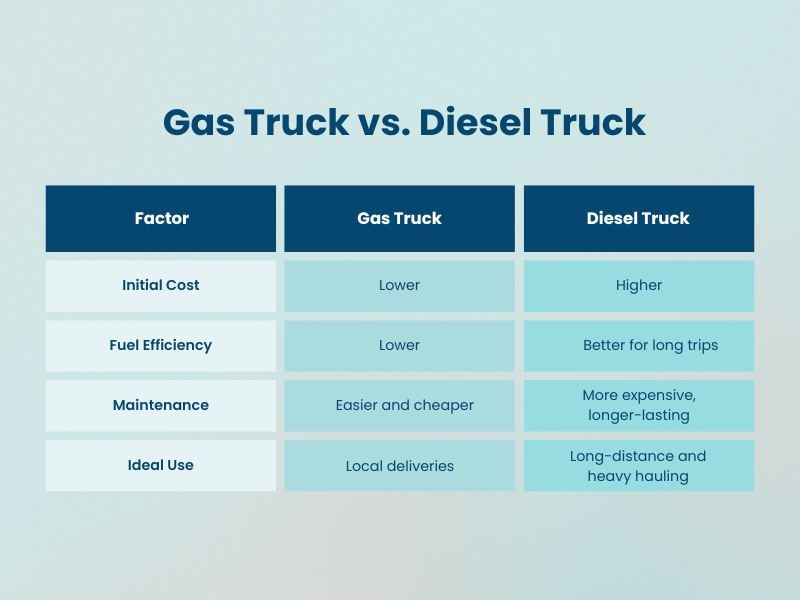
Choose gas if:

  • You’re running local jobs under 50 miles per day
  • You want to minimize maintenance costs

  • You plan to upgrade in a few years

Choose diesel if:

  • You’re hauling larger loads or traveling longer distances
  • You want better long-term fuel economy and engine durability

Essential Box Truck Features for Event Logistics

A standard commercial box truck designed for hauling lightweight retail boxes will fail quickly under the brutal daily demands of the tent rental industry. When shopping the new or used commercial market, prioritize these structural features:

1. The Liftgate: Rail Gate vs. Tuck-Away

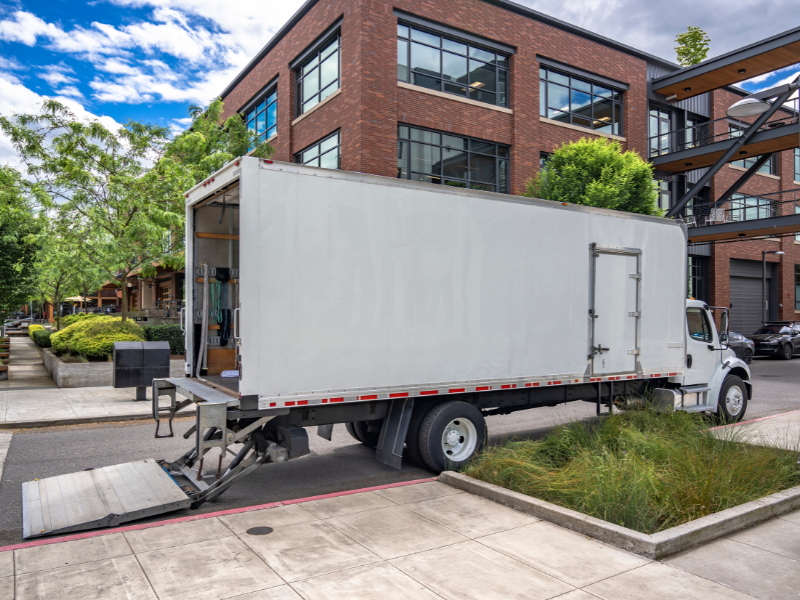
A premium hydraulic liftgate is a non-negotiable feature for an event rental truck. Manually lifting a 600-pound rolled commercial inflatable or a dense pallet of steel tent stakes out of a truck bed is an immediate safety hazard that leads to workers' compensation claims and damaged inventory.

  • Tuck-Away Liftgates: These fold up neatly and store completely underneath the truck bed frame when not in use. This allows you to back the truck flush against a standard warehouse loading dock without damaging the gate mechanism. They are highly flexible but typically offer a smaller, slightly angled lifting platform.

  • Rail Gates: These remain fixed vertically against the rear opening of the box, moving straight up and down along a heavy steel track. Rail gates feature much larger, completely flat platforms. This makes them the superior choice for operators who regularly use heavy-duty hand trucks and material dollies to roll massive, bulky items into the truck.

2. Flooring Material: Hardwood vs. Aluminum

  • Laminated Hardwood: Found in the vast majority of dry van freight boxes. Hardwood floors offer excellent traction when dry and provide a solid surface for securing cargo. However, they are highly susceptible to water damage. If your crew regularly loads wet vinyl tent tops after a rainstorm or muddy ground tarps, the wood will eventually warp, rot, and splinter if not meticulously maintained.

  • Extruded Aluminum: The gold standard for heavy-duty event operations. Aluminum floors are entirely impervious to water damage, rust, and rot. They are incredibly durable, easily handled under heavy iron wheels, and can be completely hosed down and sanitized at the end of the weekend to wash away mud, grass, and debris.

3. Interior Cargo Controls: E-Track Systems

Event equipment is dense, heavy, and prone to violent shifting during transit. A single loose corner pole or stack of folding chairs shifting at highway speeds can puncture expensive vinyl tent tops or dent aluminum framework.

Ensure the interior walls of your box truck are equipped with multiple horizontal rows of E-Track steel rails. This system allows your crew to instantly click in heavy-duty ratchet straps, shoring beams, and cargo nets at precise heights, ensuring every piece of equipment is mechanically locked into place before the truck leaves the yard.

Smart Inventory Management: Maximize Cargo Space

Choosing the right truck is only half the battle; how you organize it determines your actual speed in the field. To keep your operations running efficiently, apply strict organization principles inside the truck box:

  • Heavy Assets Over the Axles: Always load your heaviest items—such as pallets of stakes, heavy concrete weights, and large rolled tent tops—towards the front or directly over the rear axles. Heavy loads placed too far back create a dangerous leverage effect that lifts weight off the front steering tires, severely degrading braking and handling.

  • Protect Your Vinyl: Never load sharp steel stakes, heavy tent pins, or rough tools directly on top of or adjacent to vulnerable vinyl fabric. Always store stakes inside dedicated heavy-duty crates or plastic bins, and use protective tarps or canvas wraps to shield your vinyl tent tops from friction during transport.

  • Utilize Vertical Space for Poles: Use dedicated side racks or specialized overhead bins inside the box to store long perimeter and center poles vertically along the walls. This keeps the main floor area completely open for wider pallets of folding tables and chairs.

Investing in Commercial-Grade Equipment for Long-Term Value

Upgrading your fleet with a high-capacity box truck only pays off if the commercial inventory inside it is built to handle the journey. Cheap, consumer-grade pop-up canopies or lightweight plastic retail furniture will quickly splinter and break under the stresses of commercial transport and frequent use.

At TentandTable, we have spent over 25 years supplying durable, brand-new, commercial-grade equipment engineered specifically for demanding rental environments. Headquartered in Buffalo, NY, we manufacture heavy-duty equipment that withstands the daily rigors of loading, transport, and setup.

Whether you are expanding your fleet to haul massive party tents, commercial-grade inflatables, or high-volume orders of commercial tables and chairs, your assets must be engineered to deliver a strong return on investment. Our products feature premium materials like multi-layer PVC vinyl, reinforced stress points, and heavy-gauge galvanized steel frame components designed to maximize durability and ensure public safety.

With our fast nationwide shipping and dedicated team of B2B experts, we help event businesses across the country scale their inventory safely and confidently.

Frequently Asked Questions (FAQ)

How do TentandTable products hold up to frequent loading and transport in large box trucks?

Our commercial-grade inventory is engineered specifically for demanding rental environments. Our party tents use thick, UV-resistant, flame-retardant PVC vinyl tops with reinforced patches at all pole touchpoints to prevent friction wear during transit. Frame components are constructed from heavy-gauge aluminum or structural galvanized steel to prevent bending and denting when stacked inside your delivery fleet.

What are your typical shipping times for large-volume orders of tents and furniture?

From our centrally located distribution hubs, we offer fast nationwide shipping across the United States. In-stock items typically ship out within 24 to 48 business hours. For oversized freight orders—such as complete commercial tent packages or bulk pallets of chairs—we partner with reliable national LTL freight carriers to ensure safe delivery directly to your commercial warehouse or yard.

Can I customize my order to fit the specific dimensions of my truck fleet?

Yes. Our experienced commercial team regularly consults with B2B buyers to configure equipment packages that maximize their specific logistical setups. Whether you need modular tent systems that pack down into shorter, manageable frame lengths for a 14-foot truck, or high-volume table bundles configured for standard pallet jacks, we can tailor your order to optimize your cargo space.

Do you offer commercial financing options for growing rental businesses?

We recognize that scaling up your commercial equipment inventory requires significant capital. To support your business growth, we offer quick and flexible commercial financing programs tailored specifically for B2B buyers. This allows you to acquire the durable equipment you need ahead of your peak rental season while maintaining healthy cash flow for vehicle acquisitions and payroll.

Conclusion

Selecting the perfect box truck requires finding the ideal balance between legal weight limits, structural durability, and daily operational agility. By investing in a vehicle with the right GVWR rating, a robust hydraulic liftgate, and secure interior cargo controls, you protect your inventory, protect your workers, and lay down the professional foundation required to secure lucrative high-volume B2B clients.

As you plan the logistical future of your company, look closely at the equipment riding in the back of your trucks. Are you transporting commercial-grade assets built to last, or are you wasting valuable cargo space on flimsy gear that cuts into your profit margins?

If you are ready to expand your fleet's capacity with durable, commercial-grade equipment built for heavy-duty service, contact our TentandTable team today to speak with an industry expert.

What is the single biggest logistical bottleneck currently slowing down your daily event setups and teardowns?

Previous The Top 10 Costly Mistakes to Avoid When Purchasing Commercial Vendor Tents
Next Get Ready for Memorial Day Rentals: Your Seasonal Checklist Starts Here
Leave a Reply