


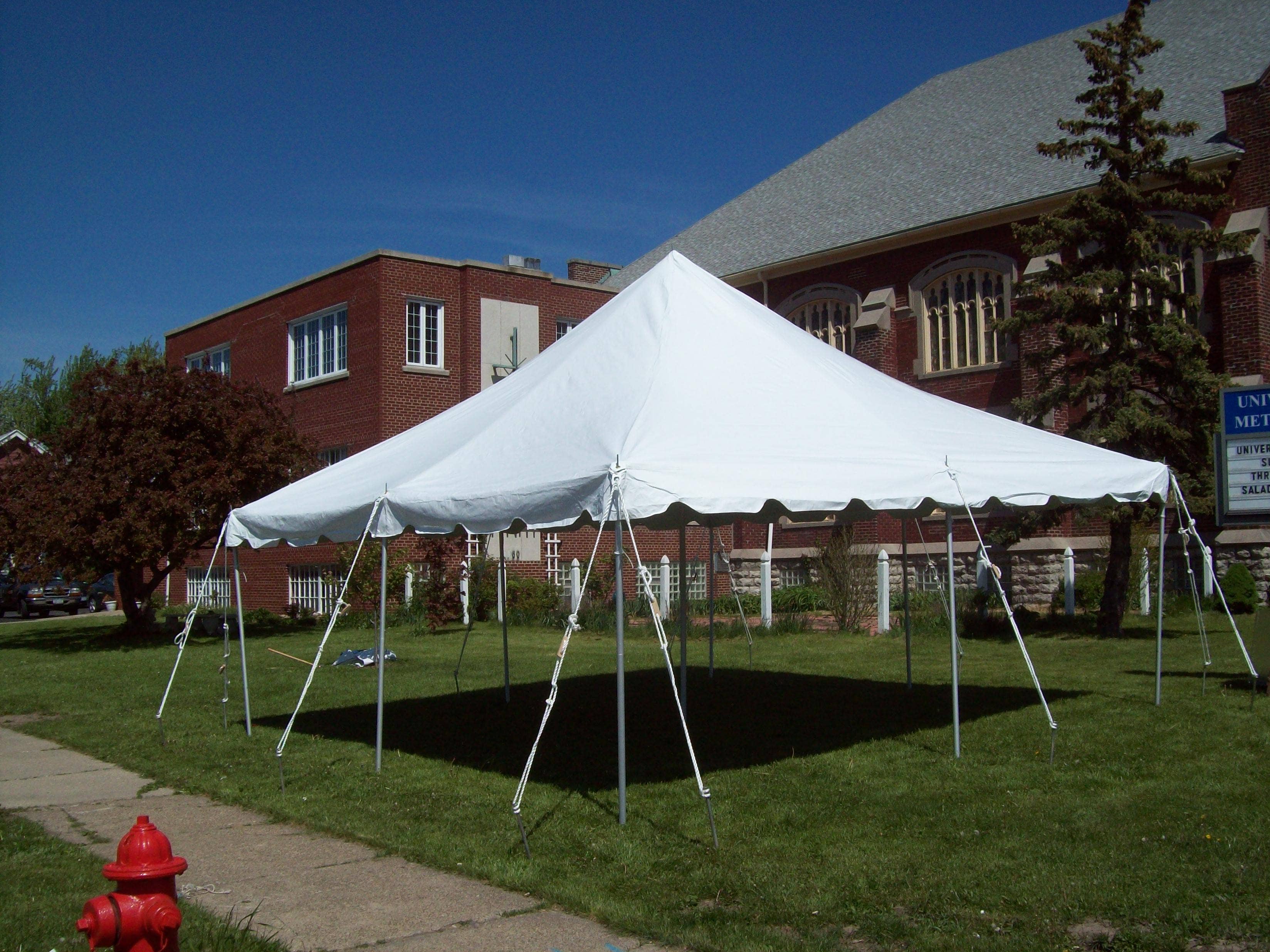
As outdoor gatherings continue to serve as the structural backbone for weddings, corporate galas, commencement ceremonies, and religious revivals, investing in commercial-grade shelter has never been more important. Among the options available, the commercial pole tent remains a time-tested favorite. Known for its soaring high peaks, elegant swooping lines, and structural simplicity, the pole tent offers an unbeatable combination of grand visual scale and exceptional cost-effectiveness per square foot.
However, selecting the right equipment requires balancing engineering, logistics, and financial strategy. For over 25 years, TentandTable (headquartered in Buffalo, NY) has supplied durable, brand-new, commercial-grade equipment built for demanding environments. We understand the unique challenges facing B2B buyers. In this comprehensive guide, we will break down everything you need to know about purchasing a commercial pole tent. We will cover technical engineering, operational safety, inventory scaling, and how to get the highest possible return on your investment.
Understanding Commercial-Grade Pole Tents
To make an informed purchase, you must understand how a pole tent works and what distinguishes a true commercial-grade structure from retail canopy alternatives.
The Anatomy of a Pole Tent
Unlike frame tents, which rely on a rigid metal skeleton to support their fabric top, pole tents depend entirely on tension. The structure consists of three primary components:
-
The Tent Top: A heavy-duty vinyl fabric stretched tightly over the support poles.
-
Poles: Center poles provide vertical lift and create high peaks, while side poles (or leg poles) establish perimeter height around the edges.
-
Anchoring System: A network of heavy-duty stakes, guy ropes, or ratchet straps that pull the tent top outward and downward, creating the tension necessary to keep the entire structure stable.
Because the structural integrity relies on this outward tension, pole tents must be anchored securely into the ground, usually by driving long steel stakes into grass, asphalt, or dirt.
What Makes a Tent True "Commercial Grade"?
For residential or occasional use, lightweight retail canopies are common. But for B2B applications—where tents are set up, torn down, transported, and exposed to unpredictable weather week after week—commercial-grade engineering is mandatory.
When analyzing party tents for sale, commercial grading means three things:
-
Blockout Vinyl Fabric: True commercial tent tops utilize heavy-duty, multi-layer PVC vinyl (typically 14oz to 18oz per square yard). This fabric is 100% waterproof, flame-resistant to meet strict local fire codes, and features an internal "blockout" layer that stops harsh sunlight from overheating the space beneath.
-
Reinforced Stress Points: Every area where a pole touches the vinyl (the peaks and corner laced sections) must be reinforced with multiple layers of vinyl and heavy-duty webbing. Without this reinforcement, wind tension can easily tear the fabric.
-
Industrial Aluminum or Steel Poles: Commercial side and center poles are constructed from heavy-gauge anodized aluminum or galvanized steel. These metals resist bending under high wind loads and will not rust when exposed to moisture during storage.
Investing in these premium materials ensures your structure remains stable and visually appealing over years of heavy use.
Pole Tents vs. Frame Tents: Which is Right for Your Inventory?
A foundational decision for any B2B buyer is choosing between a pole tent and a frame tent. Both have distinct advantages depending on your location, setup surface, and aesthetic goals.
| Feature | Commercial Pole Tents | Commercial Frame Tents |
| Structural Support | Center poles and perimeter guy ropes/straps. | Rigid metal perimeter and interior rafter frame. |
| Interior Space | Features center poles that break up the floor plan. | Completely open space with no center poles. |
| Anchoring Surface | Must be driven into stakeable surfaces (grass, dirt). | Can be weighted down with concrete ballasts or stakes. |
| Cost Per Square Foot | Lower cost; highly economical for large footprints. | Higher cost due to complex metal framing components. |
| Visual Aesthetic | Dramatic high peaks, classic sweeping look. | Flatter profile; interior frame can be left open or draped. |
The Advantages of the Pole Tent
For large-scale events, pole tents offer major advantages. Their simpler engineering translates to a lower cost per square foot, making them the most economical option when you need to cover thousands of square feet. They are also much faster to load, transport, and install, as you do not need to assemble a massive puzzle of metal rafters before lifting the fabric.
Visually, the soaring center poles create a dramatic, elegant ceiling line that is highly sought after for weddings and high-end galas. If you are regularly setting up large gatherings on grass fields, golf courses, or parks, a pole tent is often the ideal choice.
When to Consider a Frame Tent Instead
The main drawback of a pole tent is its reliance on deep staking and its interior center poles. If your target venues are primarily concrete parking lots, downtown plazas, or tight spaces up against buildings where staking is impossible, a frame tent is a better choice. To dive deeper into these differences, review our pole tent vs. frame tent quick guide or read our complete frame tent buying guide.
Sizing and Capacity: Finding the Perfect Fit for Your Audience
Choosing the correct tent size is vital for safety, guest comfort, and code compliance. A tent that is too small creates overcrowding risks, while an oversized tent takes up unnecessary storage space and complicates transportation.
Calculating Square Footage Requirements
To determine the right size, you need to understand how the interior space will be used. Different seating arrangements require completely different amounts of square footage per person:
-
Standing Crowd / Cocktail Party: Allocate 6 to 8 square feet per person.
-
Cathedral Seating (Rows of Chairs): Allocate 8 to 10 square feet per person.
-
Banquet Seating (Round Tables): Allocate 12 to 15 square feet per person to accommodate tables and chairs comfortably, along with service walkways.
Factoring in Supplemental Layout Features
Don't make the mistake of calculating space only for your guests. You must also account for additional infrastructure. If your event includes a stage, a buffet line, bar service, or entertainment, you must subtract that space from your guest capacity:
-
Dance Floors: Require roughly 2 to 3 square feet per dancing guest. For installation best practices, check our guide on dance floor setups for outdoor events.
-
Stages and DJ booths require an extra 100 to 300 square feet, depending on equipment size.
-
Buffet and Bar Stations: Require roughly 100 square feet per station.
For example, a classic 40' x 60' pole tent provides 2,400 square feet of total coverage. While it could theoretically hold up to 300 people standing, that capacity drops to around 160 guests once you add round tables, chairs, and a dance floor. For more detailed help on making these calculations, review our resource on what size party tent do I need.
Material Matters: Top Fabric Technologies and Longevity
The durability of a commercial tent depends heavily on the fabric technology used to manufacture its top. High-volume commercial environments require fabrics that resist UV degradation, physical tearing, mold, and mildew.
PVC Coated vs. PVC Laminated Fabrics
When evaluating tent tops, you will primarily see two types of heavy-duty vinyl:
-
PVC Laminated Fabric: Constructed by taking a pre-woven polyester base scrim and bonding a layer of PVC film to both sides using heat and pressure. This creates an excellent, cost-effective, and highly waterproof material with good tear resistance.
-
PVC Coated Fabric: Manufactured by liquid-coating the polyester scrim. The liquid PVC thoroughly saturates the weave, creating a much stronger bond. Coated fabrics offer superior dimensional stability, are less likely to delaminate over time, and handle heavy tension exceptionally well.
For businesses looking to maximize their long-term value, understanding the difference between PVC-coated fabric and PVC-laminated fabric tent tops is vital for choosing the right asset longevity.
Essential Material Features
Regardless of the coating method, a commercial B2B pole tent must meet strict safety standards:
-
Flame Retardancy: Tents must meet NFPA 701 standards. This is critical for getting permits from local fire marshals.
-
Mold and Mildew Resistance: The vinyl must be treated with anti-fungal inhibitors to stop mold growth during damp storage conditions.
-
UV Protection: Built-in UV blockers protect the fabric from becoming brittle under intense sunlight, keeping the vinyl flexible and strong.
Operational Essentials: Installation, Anchoring, and Safety Protocols
A commercial pole tent is an engineered structure. It requires proper training, tools, and strict adherence to safety protocols during every installation.
The Power of Proper Anchoring
Because tension keeps a pole tent standing, your anchoring points are the most critical safety feature of the entire setup. In traditional grass installations, heavy-duty steel stakes are driven deep into the earth at precise angles.
Safety Warning: Always contact local utility lookup services (like 811) before driving stakes into the ground. Striking underground power lines or gas mains can cause catastrophic accidents.
When securing your tent, using industrial-grade components is essential. Many modern commercial operators are moving away from traditional ropes and knots in favor of modern ratchets. Learning how to use ratchet straps properly ensures uniform tension across the entire structure, which prevents wind from lifting the canopy edge. For heavy-duty operations, using tools like the Thor post driver can dramatically reduce manual labor times during large-scale stake installations.
Handling Unique Surfaces and Weather
While pole tents are designed for stakeable ground, operators sometimes face unexpected challenges on site. If you must set up on a hard surface, you must follow specialized protocols, such as our guide on how to set up a party-tent on concrete.
Furthermore, you must always plan for sudden shifts in weather. From high winds to heavy downpours, reading our playbook on how to plan for weather changes at outdoor parties will help ensure your crew is prepared for any emergency.
Protecting Your Investment: Cleaning, Maintenance, and Storage
Commercial tents are valuable capital assets. With proper care, a high-quality pole tent top can easily last for years of active service. Neglect, however, can quickly ruin your fabric.
The Golden Rule of Tent Storage
The biggest threat to commercial vinyl is mold and mildew. If a tent top is packed away while even slightly damp, mildew can form within 48 hours, causing permanent stains and weakening the fabric.
Never store a wet tent. If you must tear down a tent in the rain, you must unroll it and let it dry completely at your warehouse before long-term storage.
Professional Cleaning and Rust Removal
Regular cleaning keeps your inventory looking professional and commands top-tier pricing. Specialized vinyl cleaners should be used to lift dirt, oils, and environmental soot without stripping the protective coatings from the fabric. For step-by-step instructions, follow our guide on commercial tent cleaning and upkeep.
Over time, contact with steel poles or hardware can leave rust stains on your white vinyl. Knowing how to remove rust from a party tent's fabric and metal will keep your gear looking brand new. Additionally, using protective tarps on the ground during setup prevents scuffing and asphalt stains on the white vinyl tops.
Financial Strategies: ROI, Financing, and Section 179 Tax Benefits
Purchasing commercial event equipment is a business decision that should be backed by clear financial numbers. Whether you are adding pole tents, buying commercial inflatables, or upgrading your inventory, you need to track your return on investment.
Running the Numbers
To help you make informed inventory purchases, we recommend using interactive financial planning tools.
Maximize Your Purchasing Power
When expanding your business, smart financing can keep your cash flow healthy. Capital choices like TentandTable financing solutions allow B2B buyers to acquire revenue-generating assets immediately while paying them off over time.
Additionally, American B2B buyers should take advantage of Section 179 tax deductions. This powerful tax law allows businesses to deduct the full purchase price of qualifying commercial equipment—including tents, tables, chairs, and inflatables—in the tax year they are bought and put into service, rather than depreciating the cost over several years. For a full breakdown, see our guide on how Section 179 can help event rental pros save big.
Frequently Asked Questions
What are your standard shipping times for commercial tent orders?
At TentandTable, we offer fast nationwide shipping from our centralized logistics hubs. In-stock commercial pole tents, tables, and accessories typically ship within a few business days of order confirmation. For large bulk orders, custom printing requests, or freight shipments to remote locations, delivery times vary. Our commercial customer service team provides real-time freight tracking to help you plan around your upcoming event schedule.
Can your pole tents be customized with our organization or school logo?
Yes. Custom branding is an excellent way for event rental companies, universities, and corporations to build brand awareness. We can print high-resolution logos, custom colors, and graphics directly onto our commercial PVC tent vinyl. To ensure top-tier results, review the ultimate guide to custom printed tents for artwork and formatting requirements.
How do your commercial tents hold up in extreme cold or winter conditions?
Our commercial pole tents are built using heavy-duty, multi-layer PVC vinyl that is engineered to stay flexible and resist cracking in cold temperatures. However, winter operation requires extra care. If you plan to host winter events, you must follow safety guidelines for heating a party tent in winter safely to ensure guest comfort while preventing fabric damage or fire hazards.
Do you offer volume discounts for large corporate, government, or university orders?
Yes. We regularly partner with schools, municipal agencies, summer camps, and event rental franchises across the United States. We offer competitive tier pricing and volume discounts for bulk purchases of tents, chairs, folding tables, and supplemental event rentals. Our dedicated B2B account representatives will work directly with your procurement office to build custom quotes that meet your budget.
Conclusion
Choosing the right commercial pole tent is an investment in your organization's long-term operational capacity. By prioritizing heavy-duty, commercial-grade materials, choosing the right size for your target audience, and following proper maintenance and safety protocols, you ensure your asset will generate reliable value for years to come. With over 25 years of manufacturing expertise, fast nationwide shipping, and a commitment to durability, TentandTable is proud to be your trusted partner in building successful outdoor gathering spaces.
Are you ready to upgrade your inventory, expand your venue's capacity, and maximize your business's revenue potential this season?
Contact our TentandTable team today to speak with a commercial equipment expert and find the perfect high-peak structural solution for your unique business needs.