
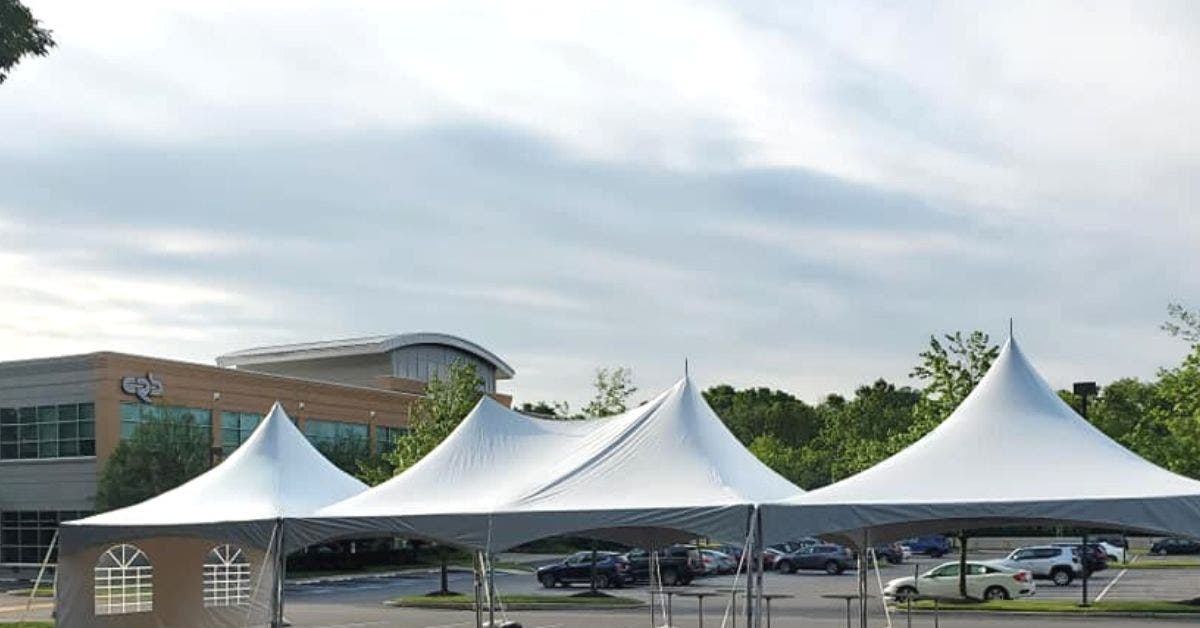
Every year, corporate enterprises, hospitality groups, educational institutions, religious organizations, and event rental companies face the same operational dilemma: how to create professional, weather-resistant outdoor spaces without draining their bottom-line capital on short-term fixes.
For years, the default answer for corporate gatherings, community outreach, outdoor dining expansion, or temporary logistics hubs was simple: call a local rental house. However, as supply chain shifts and rising fuel surcharges drive up the baseline cost of short-term equipment hire, forward-thinking B2B buyers are pivoting toward a highly lucrative alternative—commercial party tent ownership.
Investing in dedicated, commercial-grade outdoor infrastructure is no longer just a trend for high-volume event planners; it is an intelligent capital expenditure strategy. When your organization owns its assets, you instantly eliminate recurring rental invoices, bypass booking restrictions during peak seasons, and gain absolute control over your operational timeline.
Whether you are looking to scale an independent equipment inventory or searching for a permanent infrastructure asset for an institutional campus, partnering with an industry expert makes all the difference. For over 25 years, TentandTable (headquartered in Buffalo, NY) has supplied durable, brand-new, commercial-grade equipment built for demanding environments.
In this comprehensive B2B operational guide, we will break down the precise fiscal and strategic advantages of owning your assets, analyze how to choose the right structures for your specific application, and demonstrate how to convert a simple equipment purchase into a self-sustaining revenue driver.
1. The Financial Mathematics of Asset Ownership vs. Short-Term Rental
To understand why major organizations are shifting away from third-party suppliers, you must look closely at the operational lifetime costs. Relying on outside vendors introduces a long list of hidden financial leaks: multi-day rental premiums, mandatory delivery surcharges, safety inspection fees, rush installation fees during holiday weekends, and high damage-waiver costs.
When you purchase a heavy-duty commercial structure, you turn a recurring operational loss into a durable capital asset. To evaluate this shift clearly, let’s look at the financial performance over a standard timeline.
Consider a medium-sized enterprise or large church that hosts approximately six outdoor gatherings, festivals, or corporate functions every year. To provide proper shelter, they typically rent a standard commercial frame structure. According to industry pricing benchmarks outlined in our analysis of how much it costs to rent a party tent, renting a professional setup can easily cost $1,500 to $3,500 per event, depending on the region and installation complexity.
[6 Annual Events] x [Average $2,500 Rental Invoices] = $15,000 Year 1 Expenditure
At the end of that first year, the organization had spent $15,000 and owned nothing but a stack of receipts.
Alternatively, if that same organization invests upfront in high-tier commercial party tents, the initial investment for a brand-new, commercial-grade canopy structure settles in a comparable range. By the third event of the first year, the hardware has entirely paid for itself. Every event hosted after that point operates at near-zero overhead cost, immediately redirecting thousands of dollars back into the organization’s core operating budget.
Before you finalize your next inventory purchase or expand your fleet, it is vital to calculate your exact breakeven horizon based on local market rates. You can run your specific metrics directly through our interactive online tool: Try our ROI calculator to see exactly how quickly ownership pays off for your business model.
Maximizing Corporate Capital with Section 179 Deductions
The financial case for ownership becomes even stronger when you factor in strategic tax incentives designed for American business operations. Under IRS Tax Code Section 179, qualifying corporate entities can deduct the full purchase price of eligible commercial equipment—including tents, inflatables, and furniture fleets—in the exact tax year the equipment is purchased and placed into service.
Instead of slowly amortizing a tent system over several years, your business can write off the entire equipment cost immediately, significantly reducing your net tax liability. For a detailed breakdown of how to legally leverage these year-end savings to maximize your purchasing power, review our dedicated guide on how Section 179 can help event rental pros like you save big this season.
2. Choosing the Right Engineering: Pole Tents vs. Frame Tents
Selecting the ideal commercial structure requires understanding structural engineering and knowing where it will be installed. Not all heavy-duty tents are built the same way. Selecting the wrong design can lead to logistical bottlenecks during installation. The industry standard breaks down into two core categories: Pole Tents and Frame Tents.
Commercial Pole Tents: High-Impact Aesthetics and Speed
Pole structures rely completely on the physics of tension. They feature tall interior center poles that support the heavy-duty vinyl top, anchored securely via high-tensile tie-down straps driven into heavy grounding stakes.
-
Best Suited For: Grass, turf, dirt, and soft terrain setups.
-
The B2B Advantage: Because they use fewer metal frame pieces, pole tents are highly cost-effective, offer fast installation times, and provide towering, elegant rooflines that are perfect for high-end hospitality functions, large weddings, and festival main stages.
-
Logistical Constraints: They must be staked deep into the ground to maintain tension, meaning they cannot easily be erected on solid concrete without specialized engineering adaptations. Additionally, the central supporting poles break up the interior floor space, which requires careful planning when arranging large stages or dance floors.
Commercial Frame Tents: Absolute Placement Flexibility
Frame structures utilize a rigid, self-supporting skeletal matrix engineered from heavy-duty structural aluminum or galvanized steel tubing. The vinyl canopy top stretches tightly over this metal framework, allowing the tent to stand perfectly upright without needing central support poles or perimeter guy-lines.
-
Best Suited For: Concrete parking lots, asphalt event plazas, industrial loading zones, patios, and multi-surface applications.
-
The B2B Advantage: Frame designs maximize 100% of the interior square footage. Without center poles blocking the layout, you can easily set up expansive rows of folding tables and chairs, build large performance spaces, or set up heavy machinery.
-
Logistical Constraints: Because the metal frame consists of multiple components, the initial setup requires more labor and longer installation times than a basic pole tent. They also require proper anchoring, such as heavy concrete ballasts or heavy-duty industrial vinyl sandbags, when driven stakes cannot be used.
For a side-by-side analysis of setup speeds, engineering specifications, and structural weight profiles, check out our pole tent vs. frame tent quick guide.
3. Industry-Specific B2B Use Cases
The operational flexibility of owning a commercial tent pays dividends across a wide variety of commercial sectors. Here is how different B2B industries use ownership to achieve long-term growth and self-sufficiency.
1. Scaling a Highly Profitable Event Rental Business
For entrepreneurs entering the event industry, commercial tents serve as the foundational high-margin asset anchor for your entire business. A common mistake among new operators is investing solely in low-tier residential canopies that wear out after just one season.
Building a resilient fleet requires professional, commercial-grade equipment that can withstand constant setup, teardown, and transport. To set your business up for success and protect your bottom line, review our expert analysis on the 15 mistakes new party rental companies keep making.
To maximize your revenue per booking, combine your tent assets with high-demand, high-margin add-ons. By bundling your shelters with premium commercial inflatables, modular stages, and heavy-duty furniture, you create high-value rental packages. This approach significantly increases your average ticket value.
-
Inflatables Expansion: Integrating high-demand entertainment assets like commercial bounce houses and obstacle courses drastically boosts your attraction power. If you are exploring this sector, it's essential to understand your upfront capital layout; learn more by reading our industry cost guide: how much does a bounce house cost to buy, what's the real cost.
-
Inventory Bundling: Ensure your rental fleet is fully rounded out by stocking dedicated inflatables alongside your core structural shelters to secure highly profitable institutional, school, and corporate contracts.
2. Schools, Universities, and Educational Campuses
Modern educational institutions constantly deal with space constraints. Owning a commercial tent fleet gives facilities managers an instant, affordable option for expanding their physical footprint. Tents can be used to set up temporary outdoor classrooms, specialized athletic registration areas, alumni reunion spaces, or outdoor graduation stages.
These structures can also serve as central hubs for student recruitment drives or campus-wide fundraisers. Discover how to pick the right options for your campus with our comprehensive ultimate outdoor classroom tent checklist.
3. Churches and Faith-Based Ministries
For faith-based organizations, community outreach and fellowship events are central to their mission. Relying on rental companies for seasonal outdoor services, community food drives, or summer youth camps can quickly drain a church's budget.
By purchasing a high-capacity pole or frame tent, a ministry can host gatherings whenever inspiration strikes. To ensure a smooth, secure, and structurally sound setup for large crowds, follow our step-by-step guide on how to plan a successful church tent revival.
4. Hospitality, Restaurants, and Corporate Venues
In the hospitality industry, every square foot of usable space directly impacts your revenue. Restaurants, boutique hotels, and wineries can dramatically scale up their capacity by converting open patios, decks, and asphalt parking areas into protected outdoor seating zones.
Instead of turning guests away during bad weather, a weather-sealed commercial tent allows you to book outdoor reservations year-round. This keeps your tables full and protects your bottom line through every season.
4. Maintenance, Safety, and Long-Term Value Protection
A commercial tent is a significant physical investment. To ensure it delivers a strong return on investment for ten years or more, you must implement strict maintenance and safety protocols. Neglecting basic care can lead to premature fabric wear, structural failure, or costly inventory losses.
Professional Fabric Care: Eliminating Mold and Mildew
Commercial tent tops are engineered from premium, heavy-duty polyvinyl chloride (PVC) coated or laminated fabrics. While these fabrics are highly resistant to water and UV rays, they are still vulnerable to organic hazards if stored incorrectly.
Never pack away a vinyl tent top while it is damp. Trapping moisture inside the folds of dark warehouse storage creates the perfect environment for destructive mold and mildew spores.
If your tent top collects field grime, grass stains, or organic soot, it must be cleaned using specialized, non-abrasive vinyl cleaners. Avoid harsh industrial solvents like acetone or bleach, which strip away the protective UV coatings and weaken the fabric's internal threads.
For a complete, step-by-step breakdown of safe washing methods, drying techniques, and proper storage practices, read our guide on commercial tent cleaning: how to clean a party tent.
Proper Heavy-Duty Anchoring Strategies
A commercial tent functions as a massive sail when winds pick up. If it isn't properly anchored to the ground, even a mild windstorm can lift the structure, causing severe property damage or structural failure.
When setting up on soft grass, always use professional-grade steel stakes driven deep into the ground. For tough, compacted soils or high-stakes commercial setups, utilizing advanced installation equipment like the Thor post driver tent stakes Asgard system saves hours of labor and ensures deep, secure anchoring.
When setting up on hard surfaces like concrete plazas or asphalt parking lots where stakes cannot be driven, you must pivot to alternative anchoring methods. This requires engineering specialized, heavy ballast systems—such as solid concrete blocks or weighted water drums—connected securely via industrial-grade tie-downs. Learn the proper safety procedures by reading our detailed guide on how to set up a party tent on concrete, cement, and other hard surfaces.
| Maintenance Threat | Operational Consequence | Corrective Action Protocol |
| Wet Packing | Rapid mold growth, vinyl staining, foul odors | Air dry completely; pre-treat fabric with specialized vinyl cleansers. |
| Abrasive Cleaning | Strips away the protective UV coating, thins out the fabric layers | Use soft microfiber brushes and specialized commercial vinyl soaps. |
| Poor Surface Anchoring | Structural shifting, wind lift hazards, frame buckling | Apply heavy concrete ballast or use industrial-grade steel ground stakes. |
| Improper Storage | Rodent damage, deep creases, rusted hardware fittings | Store inside climate-controlled facilities using protective industrial tarps. |
5. Overcoming Winter Logistical Challenges
To truly maximize your tent investment, you shouldn't let it sit idle during the cold winter months. A commercial-grade tent can easily be transformed into a functional space for holiday pop-up markets, temporary winter storage, or heated outdoor dining venues.
However, operating during the winter requires specialized knowledge regarding temperature management and structural safety.
Climate Control and Safe Heating Procedures
You can easily maintain a warm, comfortable interior even when the outside temperature drops below freezing. The key is combining thick, weather-sealed window sidewalls with a professional heating system. Adding clear window panels keeps the cold wind out while letting natural light in, creating an inviting space for your guests.
To learn how to elevate your winter presentation, read our guide on how to enhance your wedding tent with window sidewalls.
When heating an enclosed space, safety must be your top priority. Never place unvented open-flame heaters directly inside a vinyl structure. This creates a dangerous risk of carbon monoxide poisoning and presents a direct fire hazard to your guests.
Instead, use professional, indirect-fired commercial space heaters positioned safely outside the tent perimeter, ducting clean, warm air directly inside. For a complete safety checklist and setup guide, review our analysis on whether our tent heaters are safe. Party tent heater safety.
Frequently Asked Questions (FAQs)
What are the shipping timelines for large commercial tent packages?
At TentandTable, we understand that event timelines are critical. Operating from our primary headquarters in Buffalo, NY, we provide fast nationwide shipping across the United States.
Standard, in-stock commercial tent kits, furniture packages, and accessories typically ship out of our fulfillment warehouses within 24 to 48 hours of order confirmation. For oversized freight shipments—such as large-scale modular pole or frame tent packages—delivery times generally range from 3 to 7 business days, depending on your region.
What exactly makes a tent "commercial grade" compared to retail options?
Retail or consumer-grade canopies usually feature thin, lightweight aluminum frames and low-density polyester tops that can easily tear or bend after a few uses.
In contrast, TentandTable’s commercial-grade structures are built for demanding, high-frequency use. They feature heavy-duty, commercial-grade PVC vinyl tops (often 14oz to 16oz or thicker) that are flame-retardant, 100% waterproof, and UV-resistant. The structural frames are engineered from heavy-duty anodized aluminum or galvanized steel tubing, designed to withstand high winds and repeated setups.
Can we order customized configurations or place large-volume orders?
Yes. We regularly partner with schools, universities, government agencies, and expanding rental companies that require custom solutions.
Whether you need custom-printed canopy tops featuring your organization's logo, specialized modular configurations, or large-scale orders of event furniture, our team can handle it. We also offer flexible financing programs to help you scale your inventory smoothly.
How do I determine the exact tent dimensions needed for my venue?
Your required footprint depends entirely on your layout style and guest capacity. As a general rule of thumb, a cocktail party with standing guests requires roughly 6 to 8 square feet per person.
An event using row-style theater seating needs about 10 square feet per person, while formal banquet seating with round tables requires 12 to 15 square feet per person to allow for proper service walkways. For a detailed breakdown of layout planning, read our complete guide: What Size Party Tent Do I Need? party rental company.
Conclusion
Investing in commercial tent ownership is a proven way to eliminate unpredictable rental expenses, secure valuable tax deductions, and gain complete operational control over your organization's events. By choosing durable, high-quality assets built to handle the demands of professional use, your business builds a reliable foundation for long-term growth.
Ready to upgrade your inventory, expand your venue's capacity, or launch a dedicated event rental company? Our experts are here to help you select the ideal combination of heavy-duty tents, durable event furniture, and high-margin event rentals tailored precisely to your budget and operational goals.
Don't let seasonal rental costs cut into your profits—Contact our TentandTable team today to speak with an industry specialist and secure the heavy-duty infrastructure your organization deserves.
As you look ahead to your upcoming events, ask yourself: How much capital could your organization save this year by transitioning from temporary rentals to a permanent, revenue-generating commercial asset?

