For commercial event operators, safety is not just a line item—it is the foundation of your entire business. Whether you run a fast-growing party rental company, manage university campus events, or organize community church gatherings, keeping your guests safe is your top priority.
Recently, ASTM International updated its safety guidelines with a critical recommendation that directly impacts how commercial inflatables are anchored. The new ASTM guidance calls for 1” stakes for inflatables to ensure maximum wind resistance and structural stability.
If you are currently anchoring your bounce houses, water slides, or obstacle courses with thinner, standard stakes, it is time to pay close attention. As insurance regulations tighten and municipalities adopt stricter safety enforcement, keeping up with these updates is essential to protecting your business from liability.
At TentandTable, we have spent over 25 years helping B2B buyers navigate the evolving landscape of commercial event equipment. Headquartered in Buffalo, NY, we design durable, brand-new, commercial-grade gear engineered for demanding rental environments. In this comprehensive guide, we will break down exactly what this new ASTM guideline means, why 1-inch stakes are now the gold standard, and how you can seamlessly upgrade your inventory to stay compliant.
Understanding the New ASTM Guidance for Inflatable Stakes
ASTM International sets the technical standards for materials, products, and systems worldwide to improve safety and product quality. In the amusement and rental industry, ASTM standards serve as the benchmark for operational safety.
The latest focus centers on anchoring systems. Inflatables act like giant sails when caught by sudden gusts of wind. If an inflatable is under-anchored, the consequences can be catastrophic.
What Does the Update Require?
The updated advisory specifically recommends utilizing heavy-duty stakes with a minimum diameter of 1 inch when securing commercial inflatables into soil or grass.
Historically, many operators relied on $5/8$-inch or $3/4$-inch stakes. While these smaller stakes worked under ideal conditions, engineering tests have shown that they lack the lateral load resistance needed to withstand unpredictable, high-velocity wind bursts. A 1-inch-thick steel stake offers vastly superior holding power, ensuring that even large, heavy combo units stay firmly rooted to the ground.
The Physics of Holding Power: Why 1” Stakes Make a Difference
To understand why a fraction of an inch matters so much, we have to look at how stakes interact with the ground. When wind hits a massive structure like a commercial bounce house, it applies an immense upward and lateral force.
-
Bending Resistance: A 1-inch stake has a significantly larger cross-sectional area than a $5/8$-inch stake. This makes it far more resistant to bending under intense pressure.
-
Soil Disruption: Thinner stakes slice through soft or damp soil much more easily when pulled sideways. A 1-inch stake displaces more surface area against the earth, requiring substantially more force to displace or pull out.
-
Striking Durability: Thicker stakes can withstand repeated heavy impacts from sledgehammers or specialized tools like the Thor post driver without mushrooming or warping at the top.
Investing in these heavier anchors is a smart way to protect your physical inventory. If you are curious about how to evaluate your equipment costs and returns before expanding your setup, you can try our ROI calculator to map out your business finances accurately.
How to Stay Compliant Across Different Setup Surfaces
As a professional operator, you know that no two venues are identical. You might be setting up on a lush school athletic field on Friday and a concrete parking lot for a church festival on Saturday. Implementing the new ASTM guidelines requires knowing how to adapt across various environments.
1. Anchoring on Grass and Soil
This is where the 1-inch stakes shine. For maximum holding power, ensure that stakes are driven deep into the ground, leaving only the hook or eyelet exposed. Always check with local utility companies (such as dialing 811) before driving long stakes into any ground to avoid hitting underground power or water lines.
2. Setting Up on Hard Surfaces
Stakes are useless on asphalt, concrete, or indoor gym floors. When you cannot stake into the ground, you must pivot to alternative certified anchoring methods. For detailed safety procedures on hard surfaces, read our guide on safely using inflatables on concrete.
To secure units on these surfaces, operators must rely heavily on certified concrete anchors or heavy-duty vinyl sandbags. Always consult your inflatable's manufacturer's manual to calculate the exact weight required per tie-down point when replacing stakes with sandbags.
Upkeep and Maintenance: Protecting Your Safety Inversions
Upgrading to 1-inch stakes is a great first step, but safety requires ongoing maintenance. Hard soil, rocks, and constant transport can wear down even the toughest commercial-grade steel over time.
Inspect Your Stakes Frequently
Before every single event setup, inspect your anchoring hardware. Look for:
-
Bending: A bent stake loses its structural integrity and will not drive straight into the ground.
-
Rust and Corrosion: Surface rust happens, but deep rust weakens the steel. Learn how to remove rust from metal and fabric to extend the lifespan of your setup hardware.
-
Mushroomed Tops: Repeated hammering flattens the top of the stake, making it dangerous to handle and difficult to strike. Grind down mushroomed heads to keep them square and safe.
Tie-Down Straps and Tensioning
Stakes are only as strong as the straps connecting them to the inflatable. Always pair your heavy-duty stakes with high-strength ratchet straps rather than cheap nylon ropes. If you are new to using commercial tie-downs, read our guide on how to use ratchet straps to ensure a tight, immutable hold every single time.
Expanding Beyond Inflatables: A Total System of Safety
For most commercial operators, inflatables are just one part of a profitable rental fleet. High-revenue companies often cross-sell their items, packaging bounce houses alongside party tents, tables, and chairs.
When you scale up your inventory, anchoring and safety standards remain just as strict. For example, commercial party tents require rigorous staking to withstand outdoor weather changes. Whether you are installing a traditional pole tent or a modular frame tent, choosing heavy-duty anchoring supplies prevents structural failures during unexpected storms.
If you are looking to diversify your offerings this season, explore our dedicated product lines:
-
High-quality commercial party tents for weddings, festivals, and corporate events.
-
Premium commercial inflatables, including bounce houses, slides, and interactive games.
-
Ultra-durable folding tables and chairs built to withstand heavy public use.
-
Supplemental event rentals like staging and dance floors to create complete gathering spaces.
The ASTM Has a New Safety Guidance for Commercial Inflatables
ASTM International (formerly the American Society for Testing and Materials) recently updated its safety guidelines for the operation of commercial inflatables. The new ASTM guidelines call for the use of heavier, sturdier stakes for safely anchoring inflatables than ever before.
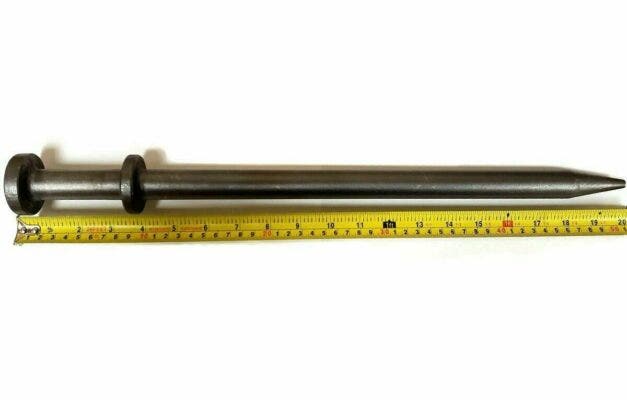
The new ASTM guidance says commercial inflatables should use tent stakes no smaller than 1” x 18” for anchoring. They also stress the importance of driving stakes vertically. Their table, shown here, indicates driving longer states vertically is the safest option.
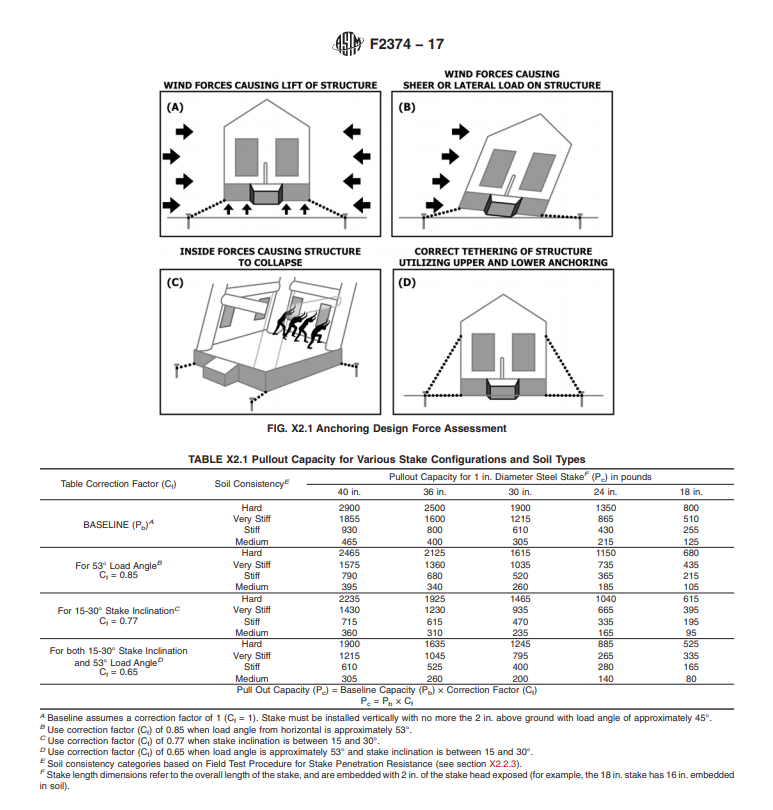
Image courtesy of ASTM International
Translated into English? ASTM International says rental operators should be using stakes no smaller than 1” x 18” when setting up their commercial inflatables. This includes bounce houses, inflatable obstacle courses, water slides, etc.
While ASTM standards are frequently adopted as safety laws, this new ASTM guidance is more of a suggestion than a hard rule. They specifically state that their goal with the new guidance is to raise the awareness of operators working with commercial inflatables
Having said that, however, adhering to this new ASTM guidance improves safety and reduces your risks of facing liability issues. It's a good idea to follow this guidance for the safety of your customers and the protection of your business.
Looking for Stakes that Match this New ASTM Guidance?
This new ASTM guidance isn’t a law set in stone, but that doesn’t mean you should write it off. Adhering to these types of guidance and standards makes your event and party rental company safer and more attractive to customers. So if you don’t already have tent stakes equal to or greater than 1” x 18”, it’s a good idea to make that investment.
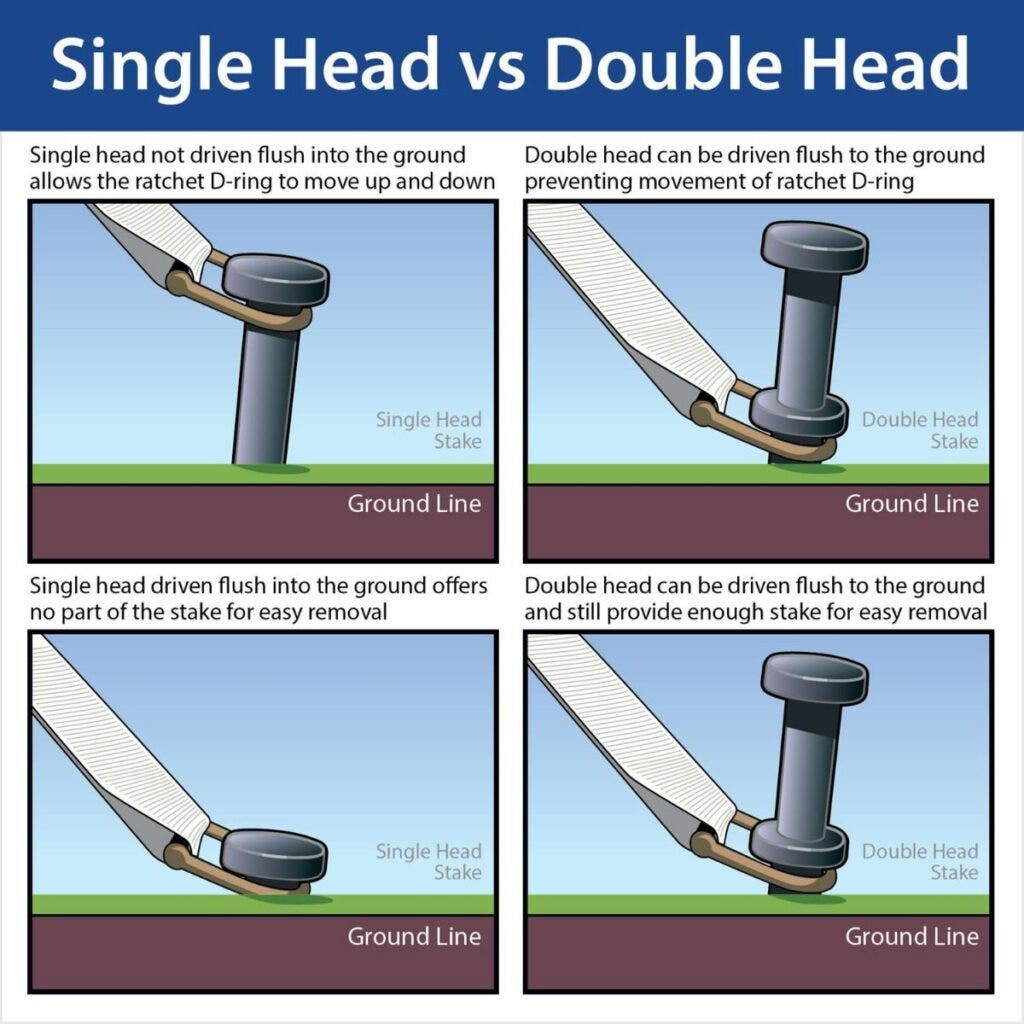
Remember, tent stakes and inflatable stakes should always be driven vertically, as straight down as possible. Driving stakes at angles reduces their effectiveness and can loosen up the ground when the inflatable pulls them upward.
TentandTable carries a wide range of inflatable stakes matching this new ASTM guidance, with lengths of 18”, 20”, 30”, and 40”. They come in both single-head and double-head formats. We do recommend using double head stakes when you can for improved safety and stability.
Practical Checklist for Inflatable Fleet Operators
To ensure your team is aligned with the latest safety standards, use this quick checklist during your next company training session:
|
Checklist Item |
Description |
Verified |
|
Stake Inventory Audit |
Verify that all active stakes for inflatable units meet the 1-inch diameter guideline. |
[ ] |
|
Striking Tools Check |
Ensure teams have access to sledgehammers or mechanical post drivers capable of driving 1-inch steel stakes. |
[ ] |
|
Strap Assessment |
Inspect all tie-down straps for fraying, tears, or broken ratchet mechanisms. |
[ ] |
|
Site Inspection |
Always identify underground utility risks and surface conditions before selecting an anchoring method. |
[ ] |
|
Weather Monitoring |
Establish a clear company policy for evacuating inflatables if sustained winds or gusts exceed safe operational thresholds. |
[ ] |
Frequently Asked Questions (FAQs)
How fast is your shipping if I need to update my staking inventory quickly?
At TentandTable, we understand that downtime costs you money. We offer fast nationwide shipping from our centralized distribution hubs to ensure your new commercial equipment and safety accessories arrive well ahead of your next major booking.
Does this ASTM guidance apply to indoor family entertainment centers (FECs)?
The 1-inch stake guidance specifically targets outdoor setups where soil anchoring is utilized. For indoor facilities where anchoring into the floor is impossible, operators must anchor units to structural columns or use heavily weighted sandbags following the manufacturer's exact ballast specifications.
What makes equipment "commercial-grade" compared to retail items?
Commercial-grade equipment is constructed using heavy-duty materials designed for constant transportation, rigorous public use, and varying weather elements. For instance, our inflatables utilize multi-layer PVC vinyl with reinforced stitching, and our tents feature robust metal fittings, ensuring a far superior return on investment compared to residential alternatives.
Do you offer volume ordering discounts for schools, churches, or large rental businesses?
Yes! We work closely with corporate event coordinators, government agencies, religious organizations, and rental businesses across the country. We provide specialized consulting, flexible financing packages, and competitive volume pricing to help you scale your operations efficiently.
Conclusion
Adopting the new ASTM guidance for 1-inch stakes is more than just a regulatory checkbox—it is a smart, proactive business decision. By upgrading your anchoring systems, you minimize operational risk, safeguard your clients, and establish your brand as a trustworthy leader in event safety. Are your current anchoring systems robust enough to protect your business and your guests against sudden, unpredictable weather changes this season?
If you want to upgrade your inventory or have questions about matching the right anchoring hardware to your commercial fleet, we are here to help. Contact our TentandTable team today to speak with a dedicated product specialist who can guide you toward the safest, most profitable equipment solutions for your business. Let's build a safer rental industry together!