


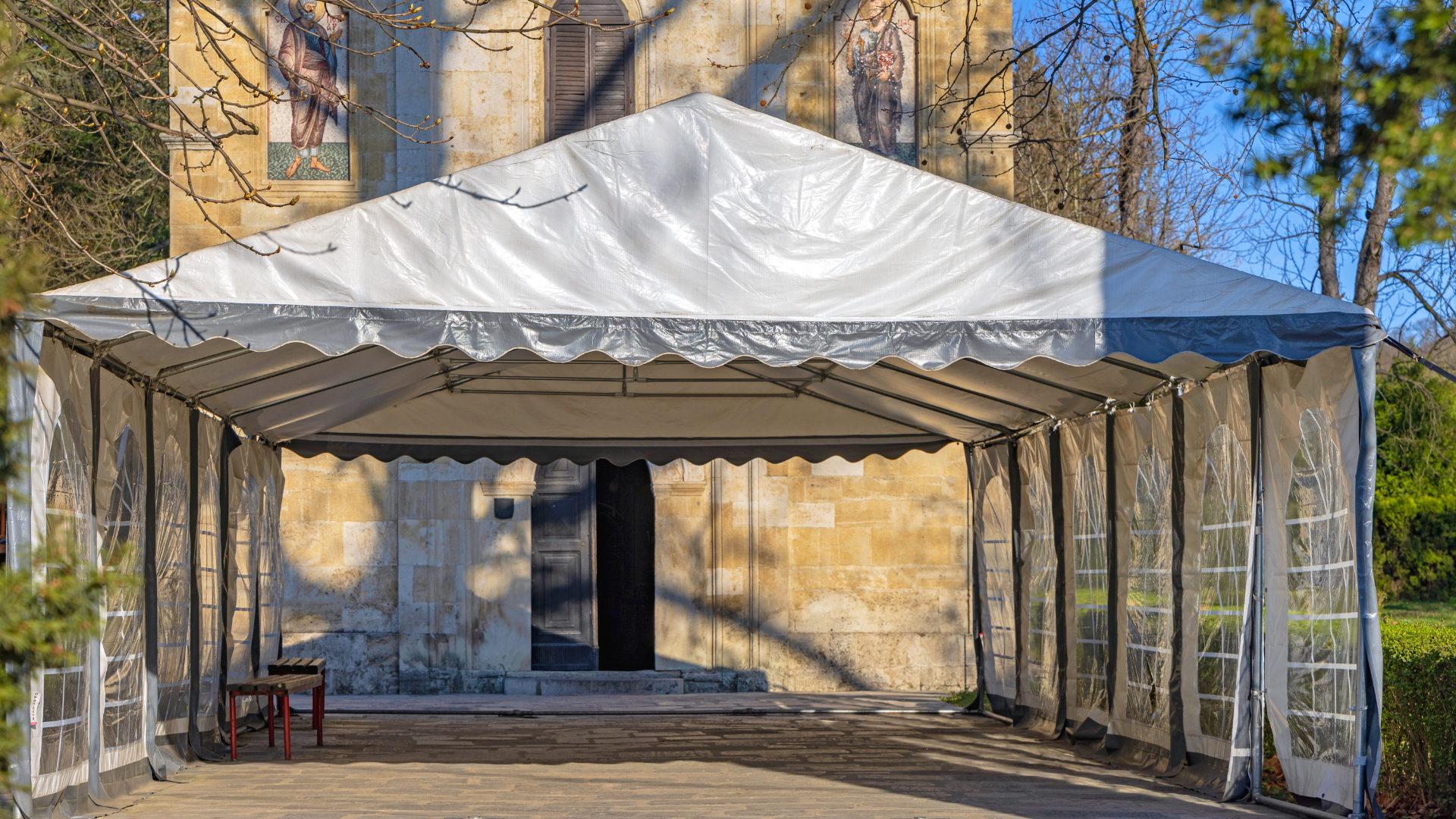
One of the most important decisions a church administrative board faces is whether to lease equipment or purchase it outright. Renting a large tent setup for multiple days can quickly drain a ministry's seasonal budget. Conversely, investing in your own high-quality equipment transforms an event expense into a long-term ministry asset.
When you own your inventory, you can host spontaneous outreach events, seasonal festivals, and outdoor classrooms whenever the need arises. Before committing your funds, it is wise to run a thorough financial analysis.
You can try our ROI calculator to clearly compare the long-term cost benefits of ownership versus recurring rental fees, helping your board make an informed, fiduciary decision. To get an idea of the market rates you'd save against, you can also read our deep dive into how much it is to rent a party tent.
Phase 2: Location Assessment and Site Preparation
The physical location of your revival determines your layout, safety parameters, and overall accessibility. Do not select a site based solely on aesthetics; practical logistics must take priority.
Choosing the Ground Surface
Where you pitch your tent dictates the style of anchoring you must use. The two most common options are grass fields and asphalt or concrete parking lots.
-
Grass and Soil: Generally preferred for a traditional "old-fashioned" revival feel. Driving heavy-duty steel stakes into the ground provides maximum wind resistance. However, you must account for ground moisture and turf protection.
-
Asphalt and Concrete: Highly accessible and eliminate mud risks if it rains. However, securing a large tent on hard surfaces requires alternative methods, such as heavy ballistic weight systems or specialized drilling. If you must set up in a parking lot, review our comprehensive manual on how to set up a party tent on concrete, cement, and other hard surfaces to ensure structural stability.
Grid Utilities and Access Points
Your site must safely support the technical and physiological needs of your attendees. Ensure your location plan details:
-
Power Supply: Sound systems, lighting grids, and climate control units pull massive amounts of electricity. Standard outdoor wall outlets will not suffice. Map out your power distribution early, ensuring you understand what generator you need for your event to prevent unexpected outages mid-service.
-
Acoustics and Visibility: Ensure the site is visible from main thoroughfares to attract drive-by visitors, but sufficiently insulated from heavy highway noise that could disrupt the preaching or worship.
-
Parking and Flow: Account for smooth traffic patterns, designated handicap parking, and clear walkways leading into the main tent canopy.
Phase 3: Selecting Heavy-Duty Commercial Equipment
When gathering hundreds of people under one structure, consumer-grade pop-ups or light residential canopies are completely off the table. You need true, commercial-grade equipment engineered for durability, weather resilience, and structural safety. For over 25 years, Tent and Table has supplied heavy-duty, brand-new commercial equipment designed precisely for these demanding environments, helping ministries across the nation build safe gathering spaces.
Choosing the Right Tent Style
The two primary styles of commercial shelters are Pole Tents and Frame Tents. Each has distinct architectural advantages depending on your revival layout.
-
Commercial Pole Tents: These are the iconic choice for classic revivals. They feature high, sweeping peaks supported by center poles and require a wider perimeter for guy ropes and stakes. They offer excellent vertical clearance and traditional ambiance but require installation on surfaces where stakes can be driven deep into the ground. -
Commercial Frame Tents: Built using a rigid aluminum or steel skeleton, frame tents do not require center poles. This leaves the entire interior completely wide open and free from structural obstructions, ensuring every seat has a clear line of sight to the pulpit or stage.
For a side-by-side comparison of structural integrity, footprint needs, and installation processes, check out our pole tent vs. frame tent quick guide.
Calculating Accurate Seating Capacities
One of the most frequent mistakes in event planning is misjudging the size of the tent relative to the crowd. You must account for the stage, audio-visual tables, altar call space, aisles, and seating density.
Pro Tip: For row-by-row sanctuary seating (cathedral style), allocate a minimum of 7 to 8 square feet per person. If you plan to set up banquet tables for post-service fellowship meals, that requirement increases to 12 to 15 square feet per person.
To see exact spacing configurations and make sure you do not buy a canopy that is too small for your expected attendance, consult our resource on what size party tent do I need. If you are looking for specific dimensions, you can also browse commercial party tents to see common dimensions like $20 \times 20$, $20 \times 40$, or massive $40 \times 100$ configurations.
Outfitting the Interior: Tables and Chairs
Your congregation and visitors may be seated for hours at a time, making comfort and durability paramount. Investing in commercial folding options ensures long-lasting value and easy storage between revivals.
-
Chairs: Look for high-back, impact-resistant resin or heavy-duty plastic folding options with reinforced steel frames. To learn more about the engineering behind these essential pieces, read about the history of party chairs.
-
Tables: For registration tables, book displays, and fellowship meals, choose blow-molded polyurethane or heavy plywood tables with solid locking legs.
Explore our professional collection of tables and chairs to find configurations that match your church's aesthetic and storage limitations.
Phase 4: Weather Contingency and Safety Engineering
Outdoor ministry means operating at the mercy of the elements. A robust weather readiness plan protects your financial investment and, more importantly, guards the safety of your congregation.
Managing Wind, Rain, and Mud
Sudden summer storms or brisk autumn winds can disrupt an event if your infrastructure isn't prepared.
-
Sidewalls: Adding commercial vinyl sidewalls protects your interior from driving rain and heavy winds. Opting for elegant cathedral-window sidewalls keeps the interior bright and welcoming while completely sealing out wet weather. Learn how to optimize these additions by viewing our guide on how to enhance your wedding or church tent with window sidewalls.
-
Flooring and Stability: In rain-heavy seasons, the ground under a tent can quickly turn muddy. Installing an elevated modular flooring system under the stage and seating areas ensures stability for older members and speakers. For actionable deployment strategies, check out our best tips for dance floor setups for outdoor events.
-
Comprehensive Preparedness: Always have a formal, written evacuation protocol for severe weather. Review our universal playbook on how to plan for weather changes at outdoor parties to build a foolproof safety net.
Climate Control Solutions
Do not let extreme temperatures depress your revival attendance. If you are hosting a revival during the peak of summer, large industrial drum fans or portable commercial AC units are non-negotiable.
Conversely, if you are planning late-fall or early-winter gatherings, tent heaters are highly effective at maintaining a warm, comfortable environment. However, safety must remain your top priority when operating high-output heating elements beneath a vinyl structure. Ensure your operations crew thoroughly reads our breakdown on are tent heaters safe to guarantee proper ventilation and clearance protocols.
Phase 5: Production, Atmosphere, and Community Outreach
Once your physical structure is secure, turn your attention to production value and creating an inviting environment for ministry.
Technical Production: Sound and Light
Outdoor acoustic properties differ drastically from indoor sanctuaries. Sound dissipates rapidly without physical walls to bounce off of.
-
Audio Distribution: Position your main loudspeakers higher than you would indoors, angled slightly down toward the back rows. Utilize secondary delay towers if your tent extends past 60 feet in length to ensure clear intelligibility of the spoken word without deafening the front rows.
-
Ambiance Lighting: As evening services transition from dusk to full darkness, high-quality lighting creates a warm, sacred atmosphere. Industrial-grade string lighting or LED uplighting along the tent perimeters provides beautiful, glare-free illumination. Learn the mechanics of rigging these lines safely by reading our tutorial on how to hang outdoor string lights in your party tent.
Youth and Family Engagement Areas
A true community revival welcomes entire families. Creating dedicated spaces for children's ministry or youth fellowship can dramatically increase overall event impact.
Consider setting up a secondary family zone adjacent to the main tent, featuring commercial interactive attractions. High-quality inflatables can serve as excellent icebreakers for community youth outreach. If your ministry team wants to incorporate these high-energy elements safely into your next big outdoor event, explore our wide array of commercial inflatables.
To draw attention from busy nearby roads and signal to families that a joyful community event is underway, you can also strategically place vibrant inflatable air dancers near your main property entrances.
Phase 6: Operational Logistics and Equipment Maintenance
The revival doesn't end when the final benediction is spoken. Preserving your equipment through proper breakdown and maintenance ensures your church can use these assets for decades.
Safe Takedown Procedures
When dismantling a large event space, organization prevents injuries and protects fabrics from tearing. Ensure your team uses industrial ratchet straps correctly during both setup and teardown phases to avoid structural shifting or sudden releases of tension. For step-by-step safety training for your volunteer crew, share our guide on how to use ratchet straps 101.
Post-Event Cleaning and Storage
Storing a commercial tent while it is damp or dirty will lead to mold, mildew, and permanent structural degradation of the vinyl fabric. Before packing your tent away in its long-term storage bags:
-
Spread the vinyl top flat on a clean protective tarp.
-
Wash down the surfaces using a specialized, non-abrasive commercial tent cleaner.
-
Let the fabric dry completely in the sun.
For an explicit list of approved cleaning solutions and storage methodologies that preserve the fire-retardant properties of your vinyl top, refer to our detailed walk-through on commercial tent cleaning. Similarly, ensure your seating inventory is wiped down and inspected for structural integrity using our pro tips for folding tables and chairs cleaning and upkeep.
FAQs
How fast does Tent and Table ship equipment, and can you deliver directly to our church property?
Yes! At Tent and Table, we offer fast nationwide shipping directly to your church, ministry campus, or specified event site. Because we house an expansive inventory of commercial-grade tents, tables, and chairs in our centralized fulfillment centers, we can process and ship orders efficiently to help you hit your strict event deadlines.
What makes commercial-grade tents safer for church events than retail options?
Commercial-grade structures are engineered specifically for public safety and long-term durability. Our party tents are manufactured using heavy-duty, flame-resistant PVC vinyl that meets strict local fire marshal codes (such as NFPA 701 compliance). They are supported by structural-grade anodized aluminum or powder-coated steel frames designed to withstand sustained wind loads, ensuring a safe gathering environment that retail pop-ups simply cannot provide.
Can our church get a discount if we order tables, chairs, and tents in large volumes?
Absolutely. We specialize in working directly with institutional buyers, including churches, schools, and government agencies. If you are outfitting a large revival space or replacing your ministry’s entire seating inventory, we offer competitive volume pricing and flexible commercial financing options to fit your church’s capital budget.
Can these tents be left up for multi-week revivals, or should they be taken down between weekends?
Our commercial-grade tents are fully engineered for extended, semi-permanent installations. If your revival spans multiple weeks, the structure can absolutely remain fully assembled, provided it was anchored correctly initially using heavy-duty stakes or professional weight systems. We recommend assigning a facility team member to check strap tension and stake stability every few days, especially following heavy storms or high-wind events.
Conclusion
Planning a successful church tent revival is an exceptional way to breathe new life into your congregation, step beyond the borders of your physical building, and create a visible, welcoming beacon for your entire community. By taking the time to carefully coordinate your timeline, invest in heavy-duty commercial equipment, and plan for unexpected weather, your team can focus entirely on the spiritual work of ministry with total peace of mind.
Every great outdoor gathering begins with a safe, reliable foundation. If you are ready to explore high-durability infrastructure tailored to your church's specific footprint and budget, Contact our TentandTable team today to speak with an institutional equipment expert.
As your team prepares for this powerful community gathering, ask yourselves: What unique needs does our local neighborhood have right now, and how can we design our outdoor revival layout to make them feel truly welcome from the moment they step under the canopy?